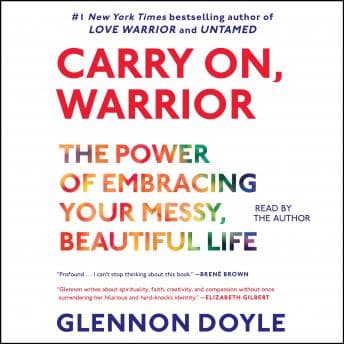

I expected a polished memoir. What I got was Glennon Doyle Melton sitting across from me at 2 AM, mascara smeared, wine in hand, telling me every secret she's ever kept.
Frida was asleep on my chest and Diego was judging me from the bookshelf (his usual spot) when I started this one. I'd just finished a client's wedding invitation suite - twelve hours of perfectionism - and I needed something that felt like permission to be a mess. Carry On, Warrior delivered. Maybe too well. I cried twice before hour three.
This Book Reads Like Your Best Friend's Blog (Because It Was)
Here's the thing everyone should know going in: this is a collection of essays adapted from Glennon's blog Momastery. And you can tell. Some chapters end abruptly, like she hit publish before fully landing the plane. There's a looseness to the structure that might drive you crazy if you're expecting a traditional memoir arc.
But honestly? That informality is also the magic. The essay "On Gifts and Talents" hit me so hard I had to pause my work and just... sit there. And "Room for One More" - about opening your heart wider than feels safe - made me think about Abuela and how she'd take in any stray kid from the neighborhood, no questions asked. Abuela would have loved this one. She'd have pressed it into the hands of every young mother at church.
The content warnings are real, though. Glennon talks openly about addiction, bulimia, abortion. She doesn't flinch. If you need heads-up for those topics, consider this your heads-up.
When the Author Narrates Her Own Trauma
Glennon reading her own words is - and I don't say this lightly - the only way to experience this book. There's a moment where she's describing hitting rock bottom with her addictions, and her voice gets this particular quality. Raw. Unpolished. Like she's reading it for the first time and remembering it all over again.
She's not a trained voice actor. You won't get distinct character voices or dramatic range. But when she shifts from describing the chaos of motherhood (genuinely funny, I laughed out loud during her kindergarten drop-off disasters) to talking about the shame she carried for years? That transition lands because you can hear her living it.
The humor is self-deprecating in a way that feels earned rather than performative. She's not fishing for "oh honey, you're not that bad" - she's just being honest about the absurdity of trying to be a functioning human.
The Vibes Are Kitchen Table at Midnight
This is not a rainy Sunday book. This is a 3 AM can't-sleep-because-life-feels-impossible book. It's for when you need someone to say "yeah, this is all really hard and you're still allowed to keep going."
The pacing is uneven - again, blog origins - so some essays hit like lightning and others meander. But the good ones? The good ones are so good. She makes shame feel survivable. Character explores similar territory around moral failure and redemption, though with less of the raw vulnerability that makes Glennon's work so immediate.
Who Gets to Sit at This Table
Listen if: You're a woman who's ever felt like you're failing at the things you're "supposed" to be good at. If you've struggled with addiction, disordered eating, or just the general impossibility of being a person. If you want to feel less alone at 7 hours and 47 minutes. If you believe that honesty is braver than perfection.
Skip if: You need tight narrative structure. If blog-to-book adaptations irritate you. If you're looking for practical self-help steps rather than emotional solidarity. If you're not in a headspace to encounter heavy topics like addiction and abortion, even handled with care.
The 1.0x speed is essential here. Glennon's delivery has natural pauses that feel intentional - speeding up would strip the intimacy right out.
Tears, Diego, and the Truth About Being a Mess
I finished this while sketching concepts for a client's brand identity, tears streaming, Diego now relocated to my lap because apparently emotional vulnerability attracts judgmental cats. This book felt like being held by someone who's been through it and came back to tell you the truth: that you're allowed to be a mess and a warrior at the same time.
It's not perfect. The structure is loose, some essays work better than others, and if you've read her later work (Untamed, Love Warrior) you might find this one less polished. But there's something beautiful about catching an author before they've been smoothed out by success. This is Glennon unfiltered, still figuring it out, still scared, still showing up.
That's the whole point, isn't it? Carry on, warrior. Even when you're unarmed.