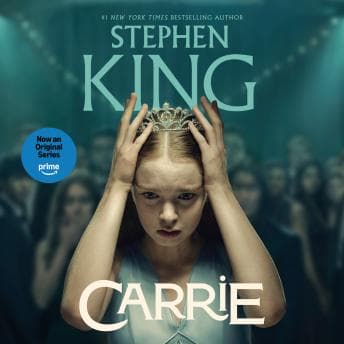

Listening to the 50th Anniversary edition of Stephen King’s 1974 debut Carrie reveals something that movie adaptations often flatten: before it is a prom-night massacre, it is a meticulously structured epistolary case file. By weaving fictionalized commission transcripts, medical textbooks, AP wire dispatches, and survivor memoirs around the main narrative, King builds Carrie White’s telekinesis with the internal consistency of a hard magic system.
Why the Atwood & Spacek Pairing Works
This special audio edition splits the microphone in a way that pays huge dividends for King’s documentary structure. Literary icon Margaret Atwood reads the introduction and gives voice to the framing perspective, while Sissy Spacek—who immortalized Carrie on screen in 1976—returns nearly five decades later to narrate the novel itself.
Hearing Spacek voice Carrie fifty years on adds an eerie, elegiac layer to the performance. Her voice carries the weight of time, yet when she channels sixteen-year-old Carrie’s terror inside her mother’s prayer closet or her fragile, trembling hope before the prom ballot, the vulnerability cuts straight to the bone.
Power Progression and Systemic Cruelty
What keeps the under-eight-hour runtime so taut is how King treats telekinesis like a muscle under extreme pressure. Carrie starts with small, involuntary sparks—a falling shower of stones, a shattered mirror—before testing her range with deliberate focus, laying the groundwork for the supernatural mechanics King later expanded across epics like Wolves of the Calla. By the time the bucket tips at the Ewen High gymnasium, you understand the exact physical force she commands.
Yet the real horror isn’t the telekinesis; it is the relentless institutional and religious cruelty that leaves a traumatized teenager with zero exits—a theme of outsiders and community failure that King still excavates decades later in The Outsider.
Stay past the final chapter for the bonus craft conversation between King and Atwood, which rounds out a landmark horror production.