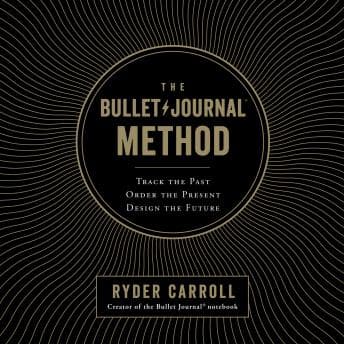

I've read probably forty books on productivity systems. Listened to another twenty. Most of them are the same recycled GTD principles dressed up in new language, padded to hit that magical 8-hour audiobook runtime that justifies a full credit price.
The Bullet Journal Method is not that book.
Here's the thing that caught me off guard: Ryder Carroll isn't selling you a productivity system. He's selling you a philosophy wrapped in a productivity system. And somehow—I can't believe I'm saying this—it works.
When the Creator Becomes the Teacher
Carroll narrates his own book, and normally that's a red flag. Authors are not voice actors. But Carroll has this measured, encouraging delivery that matches the intentionality he's preaching. No dramatic flourishes. No hype. Just a guy explaining the thing he built because he needed it himself.
He opens with his ADHD diagnosis and how traditional planning systems failed him. This isn't some Silicon Valley productivity guru who's naturally organized telling the rest of us to just "be more disciplined." This is someone who built a lifeboat because he was drowning. That authenticity carries through the entire 5 hours and 42 minutes.
(My parents would've appreciated this guy. No shortcuts. No apps. Just a notebook and a pen. They ran a dry cleaning business for 30 years with a spiral-bound ledger and stubborn consistency.)
The Philosophical Pivot I Didn't See Coming
About two hours in, the book shifts from "here's how to make lists" to "here's why you're making lists in the first place." Carroll introduces concepts like Radiance—finding what genuinely matters to you—and spends real time on the difference between being busy and being productive.
I've seen this distinction made badly in a hundred business books. Carroll makes it simply, then moves on. No belaboring. No padding. At 5:42, this book respects your time in a way that a 12-hour productivity tome never could.
The core methodology—rapid logging, migration, future logs, collections—gets explained clearly enough that you could implement it immediately. But the real value is in the framework for deciding what deserves your attention in the first place. Skip to the section on "The Mental Inventory" if you're already familiar with bullet journaling basics. That's where the actual insight lives.
The Audiobook Paradox
I'll be honest: there's something deeply ironic about listening to a book about analog productivity while jogging through Koreatown at 6 AM. The bonus PDF with visuals helps—you'll want to download it before listening—but this is fundamentally a book about putting pen to paper.
That said, Carroll's narration actually enhances the philosophy sections. His tone is warm without being preachy. When he talks about intentional living and weeding out distractions, you believe he practices what he preaches. The man sounds like someone who actually uses his own system, which is more than I can say for most productivity authors I've encountered.
No music. No sound effects. Just Carroll talking directly to you. Clean production, no audio issues even at 1.75x speed.
Who Should Grab a Notebook (And Who Shouldn't Bother)
If you're a frustrated list-maker who's tried every app and still feels scattered—this is your book. If you're skeptical of analog systems because "we have phones now"—give it two hours. Carroll makes a compelling case without being a Luddite about it.
Skip it if you're looking for a quick productivity hack. This isn't a life hack. It's a life practice. There's a difference. Also skip if you want someone to tell you exactly what to do. Carroll gives you the framework, but you have to fill in the content. That's the point, but it frustrates people who want prescriptive solutions.
The Partner Test
At McKinsey, we had a saying: "Would a partner pay for this insight?" Meaning—is this actually valuable, or is it just well-packaged common sense?
The Bullet Journal Method passes that test. Not because the individual components are revolutionary—they're not—but because Carroll synthesizes them into something coherent and immediately applicable. The methodology is simple enough that you can start tomorrow. The philosophy is deep enough that you'll still be thinking about it next month. Breaking the Habit of Being Yourself tries to hit that same depth but gets lost in pseudoscience where Carroll stays grounded.
My parents built a business with a notebook and discipline. Carroll just gave that approach a framework and a name. Sometimes that's enough.