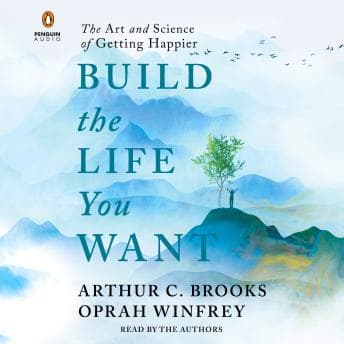

Look, I'm going to be honest with you. When I saw Oprah Winfrey's name on a happiness book, my consultant brain immediately went to "celebrity cash grab." I've sat through too many boardroom presentations where executives quote feel-good books they skimmed on a plane. But Arthur C. Brooks is a Harvard Business School professor who's been publishing serious research on happiness for years. So I gave it a shot during my morning commute. Six hours later, I'm genuinely surprised.
Bottom line: This is one of the rare self-help books that respects your time AND delivers actionable frameworks. Not perfect, but the ROI is solid.
The Harvard-Oprah Paradox
Here's what makes this pairing actually work - Brooks brings the data, Oprah brings the humanity. And they don't pretend to be something they're not. Brooks sounds like a professor. Slightly dry, methodical, the kind of guy who'd show you a PowerPoint at dinner. Oprah sounds like Oprah - warm, authentic, occasionally interrupting with "Mmmhmm" energy that somehow works in audio format.
Some listeners find Brooks less captivating. I get it. The man is not a trained narrator. But here's the thing - I'd rather listen to someone who actually understands the research explain it clearly than a voice actor making it sound dramatic. My parents didn't need charisma to run a successful dry cleaning business. They needed to know what they were doing. Same principle applies here.
The four pillars framework - family, friendship, work, faith - isn't revolutionary. But Brooks backs it up with actual studies instead of just vibes. This is what my parents did instinctively. Now it has a TED talk. And honestly? The research validation is useful when you're trying to convince a stressed-out founder that maybe, just maybe, they should call their mother.
Where the Consulting Brain Kicked In
The emotional self-management tools are where this book earns its keep. Brooks introduces what he calls "metacognition" - basically watching your own thoughts like you're reviewing a performance dashboard. As someone who's spent years helping companies analyze their operations, applying that same rigor to emotions makes intuitive sense.
The key takeaway is worth the listen. The other 5 hours? Mostly worth it too, which is rare for this genre. I listened at 1.5x (yes, I slowed down from my usual 2.0x - the concepts needed processing time) and found myself actually pausing to think. That almost never happens.
Now, the religious undertones. They're there. Brooks doesn't hide his faith, and some sections lean into spiritual territory. If that's not your thing, you might find yourself zoning out during those parts. I grew up in a Korean church where Sunday service was the only break my parents got from the store. So the faith pillar landed differently for me than it might for you. Your mileage will vary.
The Practical Stuff That Actually Stuck
Here's what I've already implemented with clients:
The distinction between "wanting" and "liking" - Brooks explains why achieving goals doesn't always make us happier. I've seen this fail at three different startups where founders hit their metrics and felt emptier than before.
The "reverse bucket list" concept - writing down what you've already accomplished instead of chasing the next thing. Simple. Effective. My wife Jenny would say I needed to hear this. Jenny is right.
The friendship research - apparently we're all terrible at maintaining friendships after 30. The data on this is depressing but useful.
The production quality is clean. No weird audio issues, no background noise. When they switch between narrators, the transition feels natural - like a conversation rather than a tag-team wrestling match.
Would I Recommend This to Clients?
Depends on the client. If you're a burned-out founder who thinks happiness is something that happens after the exit - yes, listen to this immediately. If you're looking for entertainment or a dramatic narration experience, this isn't it. Brooks sounds like he's teaching a class because he basically is.
Finally, a business-adjacent book that respects your time. At under six hours, it's lean. Awaken the Giant Within takes the opposite approach—it's dense and demands more commitment, but the frameworks are similarly actionable. The concepts are research-backed but accessible. And Oprah's presence - while initially making me skeptical - actually grounds the academic content in something relatable.
My 2.0x speed couldn't save some of the slower sections, but I didn't abandon this one. That's higher praise than it sounds.