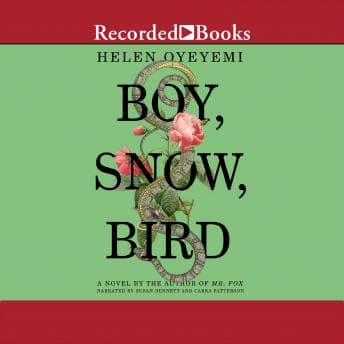

What do you do when the fairy tale you thought you knew turns out to be about something you never saw coming?
I started this one during Sophie's nap on a Tuesday - she'd been fighting sleep for forty minutes, and I was sitting on the hallway floor outside her door like some kind of hostage negotiator. When she finally went down, I hit play and didn't move from that spot for two hours because I was genuinely afraid if I stood up, the floorboards would creak and wake her. And honestly? I'm glad I stayed put, because this book needed my actual attention in a way I wasn't expecting.
Snow White, But Make It 1950s Massachusetts
Here's what grabbed me: Boy Novak (yes, that's her name, and yes, it threw me for ten minutes) shows up in this tiny New England town running from something ugly in New York, and she ends up marrying a widower with this perfect, luminous daughter named Snow Whitman. You can see the fairy tale scaffolding, right? Wicked stepmother, beautiful stepdaughter, mirrors. But Helen Oyeyemi does this thing where she takes that framework and fills it with questions about race and passing - when Boy's own daughter Bird is born dark-skinned, it blows open the secret that the Whitmans are light-skinned Black people who've been passing as white for generations. The mirror isn't magic here. It's just honest.
What I loved is how the book shifts perspective. The first half is Boy's voice - sharp, guarded, a woman who grew up with a genuinely terrifying father and learned to keep her edges hidden. Then we get Bird's letters and perspective in the second half, and she's this fierce little kid trying to understand why her sister Snow was essentially sent away. As a mom of three who spends half her life refereeing between Emma and Lucas over who got the bigger popsicle, the idea of a family fracturing over which child looks "right" hit me somewhere uncomfortable.
Two Narrators, Two Very Different Women
Carra Patterson handles Boy's sections and Susan Bennett takes Bird's, and the split works. Patterson gives Boy this careful, watchful quality - like a woman who's always measuring the room before she speaks. There's a guardedness in her delivery that makes perfect sense for someone hiding from her past. Bennett's Bird is younger, more open, more willing to be angry out loud. The character differentiation between the Whitman family members was clear enough that I could follow who was talking even when I had to pause to fish a crayon out of Sophie's mouth (don't ask).
Survived 47 pauses and still made sense - mostly. And that "mostly" matters, because I have to be honest about something.
Where It Lost Me (And I Tried, I Really Tried)
Oyeyemi writes like someone building a dream. Which sounds lovely until you're trying to follow the plot during the chaos of after-school snack time and suddenly there's a scene with a mirror that may or may not be supernatural, and a rat catcher who may or may not be real, and you're standing in the kitchen thinking "wait, did I miss something or is this intentionally confusing?" The answer, I think, is both.
The second half especially felt like the story started pulling in too many directions. Bird's quest to find Snow, the family secrets layering on top of each other, and then there's this ending that I won't spoil but - look, I've read enough to know when an author deliberately leaves things unresolved as an artistic choice, and I respect that. But I also wanted more. The themes about beauty and race and who gets to be seen as worthy? Powerful. The actual plot resolution? It left me sitting in the pickup line at Emma's school feeling slightly unsatisfied, which is different from ugly-crying but not necessarily better.
At 9 hours and 21 minutes, it's a manageable length. I finished it in about a week, which is solid. But this isn't a comfort read. Not even close. It's the kind of book that makes you think about how you talk to your kids about what's beautiful and who decides, and then you're having feelings at Target again but for completely different reasons.
Who This Is For (And Who Should Grab Something Else)
If you want literary fiction that uses fairy tale bones to talk about race in America, and you're okay with ambiguity, this is genuinely interesting. If you need a clean plot arc with a satisfying ending - the kind where you close the book and exhale - this isn't it. My book club would love this (if I ever have time for book club again) because there's SO much to discuss. The last time I had this many feelings about family secrets and identity layered into a single story was with Happy Ever After, and that one sparked just as much hallway-floor debate in my head. But if you're looking for your next easy car-time listen, keep scrolling.
The Mom Verdict: Worth the Mental Energy, Not the Nap-Time Standard
Not groundbreaking in every way, but the questions it asks about family and identity and who we pretend to be? Those stuck with me. I just wish the story had landed as hard as its ideas did.









