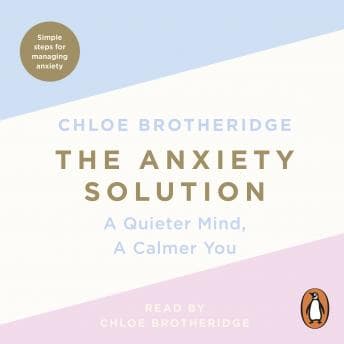

Anxiety is an overhead cost I can't afford. It burns mental cycles, kills decision-making velocity, and quite frankly, it's inefficient. I picked this title up at 3 AM on a Tuesday, staring at a client's cap table that looked like a crime scene. I needed a fix, and I needed it fast.
WHERE THIS SITS IN THE SELF-HELP STACK
I've read them all. The Chimp Paradox, The Subtle Art..., Atomic Habits. Most are just common sense packaged in better fonts. Brotheridge's book sits in a different vertical.
If The Chimp Paradox is a boot camp instructor screaming at your amygdala to stand down, The Anxiety Solution is a cup of tea and a warm blanket. It's softer. It lacks the aggressive, "crush it" energy of the business books I usually inhale. And honestly? That's the differentiator.
When you're already red-lining, you don't need a Navy SEAL telling you you're weak. You need a clinician. Brotheridge is a hypnotherapist, and the approach here is clinical but accessible. It's not dense like The Body Keeps the Score—which requires a PhD to digest while commuting—but it's not fluff either. It's the kind of practical calm I wish I'd found in Happiest Baby on the Block—that one had the right intent but felt too formulaic. Actionable, but gentle.
BROTHERIDGE'S BRITISH THERAPIST DELIVERY
Brotheridge narrates it herself. Usually, author-narrated books are a gamble—writers often have the charisma of a damp spreadsheet. But here, it works. She has that specific British cadence that makes everything sound 30% more reasonable.
I listened at 1.75x speed. I tried my usual 2.0x, but her pacing is deliberate. It's designed to slow your heart rate, not spike it. Speeding it up too much defeated the purpose, which annoyed me, but I adjusted.
No character differentiation because there are no characters—just her, talking you off the ledge. She sounds like a big sister who happens to have a degree. She shares her own panic attacks, which adds credibility. My parents never talked about their stress—they just worked harder. Brotheridge actually unpacks the why. It's a different operating model.
TOOLS YOU CAN USE WITHOUT LOOKING UNHINGED
Here's the breakdown on utility. The book is short—under six hours. For a consultant, that's a quick flight.
She covers the basics: social media validation loops, perfectionism, the fear of not being "enough." If you've been in therapy for years, this is going to feel redundant. You won't find groundbreaking neuroscience here. It's a refresh, not a rebuild.
The tools are decent though. Breathing techniques, grounding methods—stuff you can actually use in a meeting without looking like you're having a seizure. I tried one of the breathing exercises before a board meeting. It worked. I didn't yell at the CFO. That's a win.
WHO GETS VALUE HERE (AND WHO DOESN'T)
If you're a veteran of the self-help genre, skip it. You've heard this before in five other books. But if you're new to managing anxiety—or if you're like me, treating your brain like a machine that never needs maintenance—it's a solid entry point.
My wife Jenny saw me listening to this and asked if I was finally admitting I have feelings. I told her I was just optimizing my neural pathways. She rolled her eyes. She's probably right.
NET-NET
Competent, calming, and concise. It didn't change my life, but it lowered my blood pressure for an afternoon. Sometimes that's the ROI you need.