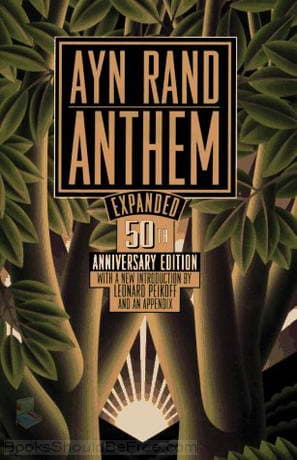

The Confession
Okay, so I'm gonna be real with you. I listened to this instead of working on my thesis chapter about procedural generation in roguelikes. Dr. Patel would be disappointed, but honestly? Two hours and thirteen minutes is basically nothing. That's like half a commute to Atlanta. That's one session of my D&D group arguing about whether fireball is overpowered. (It is. Fight me.)
And look, I know what you're thinking. "Tom, Ayn Rand? Really?" Yeah, I hear you. But here's the thing - strip away all the Objectivism discourse for a second and what you've got is a dystopian novella that reads like someone took a D&D campaign setting where the DM said "what if we made a society where the word 'I' literally doesn't exist" and just... ran with it. That's worldbuilding, baby. Weird, unsettling, philosophically heavy-handed worldbuilding, but worldbuilding nonetheless.
A Society That Deleted the Self
So the premise is basically this: future society has gone full collectivist nightmare mode. No individual names - everyone's called things like "Equality 7-2521." No personal pronouns. Technology has regressed because innovation requires someone to think "hey, I have an idea" and that's illegal now. It's giving 1984 vibes but written before 1984 existed, which is kind of wild when you think about it.
The progression here is satisfying in a different way than I'm used to. This isn't Sanderson-level magic system construction - there's no hard rules about how the collectivist society functions mechanically. Though honestly, if you want to see Sanderson actually flex on worldbuilding, Way of Kings is where it's at. But watching Equality 7-2521 slowly rediscover the concept of self? That hit different. It's like watching a character in a video game realize they're in a video game, except the game is oppressive groupthink and the realization is "wait, I'm allowed to want things."
Rand's prose is stark. Like, really stark. Almost biblical in places. Which works for the vibe she's going for - this grand rediscovery of individualism told in these sweeping, declarative sentences. The whole thing reads like a manifesto disguised as fiction. Your mileage will vary wildly on whether that's a feature or a bug.
The Narration Situation
Alright, here's where I gotta be honest. Chere Theriot's narration is... fine? It's clean, it's clear, the audio quality is solid (this is a LibriVox recording, so free audiobook energy, which I respect). She reads the text faithfully and you can understand every word.
But - and this is a real but - the delivery is pretty flat. We're dealing with a story about a man rediscovering his entire sense of self in a world that's tried to erase individuality, and the narration kind of... doesn't match that intensity? There are moments that should hit like a critical hit and instead they land more like a glancing blow. The famous ending - which I won't spoil but involves a pretty significant revelation - deserved more dramatic oomph than it got.
Steven Pacey walked so other narrators could run, and unfortunately Theriot is kind of... walking at a steady pace the whole time. I had similar narrator frustrations with Eldest, where the performance just didn't match the epic scope of what was happening on the page. Not bad walking! Competent walking. But when your source material is this philosophically charged, you want someone who's gonna lean into the drama a bit more.
There's an argument to be made that the neutral delivery fits the early parts of the story, when Equality 7-2521 is still suppressed and hasn't found his voice yet. The monotone could be intentional. Could be. I'm being generous here.
Who Should Listen (And Who Should Skip)
Look, this is a weird one to recommend. If you're into dystopian fiction and want to understand where some of the genre's DNA comes from, this is worth your two hours. It's short enough that even if you hate it, you haven't lost much. My D&D group would probably have a field day with the worldbuilding - imagine running a campaign in this setting where the party has to rediscover lost technology while hiding from the Council of Scholars. Actually, I'm writing that down.
If you're already a Rand fan, you know what you're getting. If you're Rand-curious (is that a thing?), this is way more accessible than slogging through Atlas Shrugged's 60-hour audiobook. Baby's first Objectivism, basically.
But if you need your narrators to bring the heat? If flat delivery pulls you out of a story? Maybe read this one instead. The text is public domain, it's like 50 pages, you could knock it out in an afternoon. The audiobook doesn't add enough to justify itself over just reading it.
The Verdict
Anthem is a fascinating historical artifact of dystopian fiction wrapped in Ayn Rand's particular brand of philosophical sledgehammer. The worldbuilding premise is genuinely interesting even if you roll your eyes at the ideology. But this specific audiobook? It's serviceable. That's the best word I've got. The narration doesn't hurt the story, but it doesn't elevate it either.
I listened to this instead of writing my thesis. Was it worth it? Eh. It was fine. Two hours I could've spent on chapter three, but also two hours I could've spent rewatching Sanderson lectures on YouTube, so really, who's counting.
If you're gonna listen, do it during chores or a short commute. Don't give it your full attention - it doesn't quite earn it in audio form.