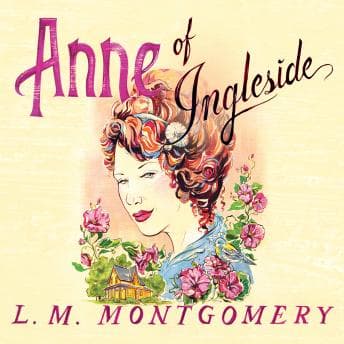

What happens when the girl who dreamed of puffed sleeves and Lake of Shining Waters becomes the woman juggling five children and an insufferable houseguest?
I found myself pondering this while walking the lakefront at sunset last Tuesday, Denise beside me but lost in her own podcast, while I listened to Anne Shirley—now Anne Blythe, Mrs. Doctor of Ingleside—navigate the beautiful chaos of middle adulthood. And here's the thing Montgomery understood that so many modern writers forget: growing up doesn't mean growing ordinary.
The Anne You Know Is Still There (Mostly)
Let me be honest with you the way I'd be honest with my AP Lit students: this isn't the Anne of Green Gables you remember. The dreamy orphan girl is now a mother of five, and Montgomery makes a choice here that will either delight or frustrate you. She shifts focus substantially to Anne's children—their small dramas, their imaginary worlds, their heartbreaks. Anne becomes almost a supporting character in her own story.
My students would probably hate this. I love it.
Because here's what Montgomery is really saying: motherhood doesn't erase identity, but it does transform perspective. Anne still has her irrepressible imagination, still sees poetry in ordinary moments, but now she filters everything through the lens of her children's experiences. There's a profound generosity in that—and also, if we're being honest, a kind of melancholy.
The subplot about Anne worrying Gilbert no longer loves her? That struck me harder than I expected. Twenty years of marriage to Denise, and I still sometimes wonder if she regrets marrying the English teacher who talks about Faulkner at dinner parties. Montgomery captures that particular middle-aged anxiety with devastating precision.
Barbara Barnes and the Art of Differentiation
Barbara Barnes narrates with clear, warm delivery that suits Montgomery's gentle prose. She differentiates the children's voices effectively—you can tell Susan Baker from Aunt Mary Maria without checking the chapter heading. That matters in a book with this many speaking parts.
But. (And this is where I have to be honest.)
Some listeners have noted Barnes sounds inexperienced at times, and I caught what they meant. There's a slip with the letter 'e' that pulled me out of the story—small thing, but noticeable. The emotional delivery at the ending, though? That landed. When Anne reflects on her children growing up, when she foreshadows Walter's fate (and if you know Montgomery's series, you know what's coming), Barnes finds the weight of those moments.
She's not performing the text the way a great narrator interprets it. She's reading it competently, with occasional flashes of something more.
Aunt Mary Maria and the Patience of Saints
Can we talk about Aunt Mary Maria? Because Montgomery created one of literature's most perfectly irritating houseguests, and listening to her passive-aggressive commentary while grading sophomore essays at 11 PM felt almost too real. Every family has an Aunt Mary Maria. If you think yours doesn't, I have news for you.
The domestic details here—the small grievances, the interrupted conversations, the way children's problems feel enormous to them and exhausting to their parents—this is where Montgomery's genius lives. Black Beauty - Young Folks' Edition captures that same timeless quality in its portrayal of kindness and cruelty—different century, same human truths. She wrote this in 1939, and the rhythms of family life haven't changed. My colleagues complain about the same things Anne complains about. We just have smartphones now.
The Pacing Question
Some listeners found this tiresome. Slow. I understand that criticism without agreeing with it.
This is a book about ordinary days. It moves at the pace of domestic life, which is to say: sometimes nothing happens for hours, and then everything happens at once. If you're looking for plot-driven urgency, you'll be frustrated. If you can surrender to the rhythm of children's bedtimes and garden parties and small-town gossip, there's real pleasure here.
I listened at 1.0x because the prose deserves to be savored. Montgomery chose those words carefully.
Who Should Listen (And Who Shouldn't)
This is for you if: you've read the earlier Anne books and want to see her life unfold, you appreciate character-driven stories about ordinary people, you find comfort in domestic fiction, or you need something gentle for bedtime listening.
Skip it if: you want Anne front and center as protagonist, you need faster pacing, or you've never read the series (start with Green Gables, obviously).
Worth Pausing the Faculty Meeting For?
Here's my honest assessment: this is a good audiobook of a beloved book, not a great one. Barnes is competent but not transcendent. The story itself is beautiful in that quiet Montgomery way—the ending brought genuine tears, and I'm not ashamed to admit it.
For Anne devotees, it's worth your time. For newcomers, it's the wrong entry point. For those of us who grew up with Anne and now find ourselves in middle age wondering where the years went—well. Montgomery understood that feeling before we did.
The classics endure because they tell truths we keep needing to hear.