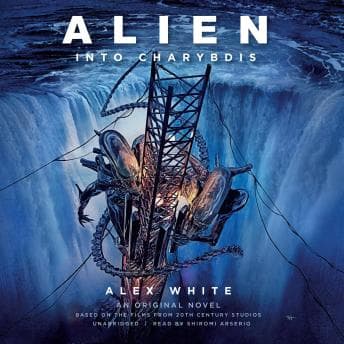

Look, I deal with integration hell every day. My job is literally making System A talk to System B without everything catching fire. So when I started Alien: Into Charybdis, I felt seen. The main characters aren't space marines or chosen ones—they're tech contractors. They just want to set up the network, get their paycheck, and leave.
But because this is the Alien universe, the "legacy code" they're dealing with involves ancient ruins, and the "bugs" have acid for blood. Honestly, it triggered my on-call PTSD.
Sysadmin Nightmares (With Acid Blood)
Here's the setup: A tech crew from McAllen Integrations arrives at a colony run by the Iranian state to fix their environmental systems. The politics are messy—imagine trying to debug a distributed system where half the nodes actively hate the other half. Alex White (who wrote The Cold Forge, which is basically the gold standard for modern Alien books) nails the corporate/political friction.
That same grounded tech-savvy approach shows up in Ready Player One, though Wade's VR debugging sessions are significantly less likely to melt your face off.
It feels grounded. The tech jargon actually makes sense, which usually drives me up the wall in sci-fi. But once the Xenomorphs show up, the shift from "corporate thriller" to "survival horror" is brutal. I was listening to this on the 6 AM Caltrain, and I swear I jumped when the conductor announced the San Mateo stop. The tension is palpable. It's not just jump scares; it's that dread of knowing the system is failing and you can't patch it fast enough.
The Voice That Sold the Terror
I hadn't listened to Shiromi Arserio before. I'll be honest—it took me about 30 minutes to calibrate to her style. Her cadence is very precise, almost deliberate. But once the chaos starts? She is terrifyingly good.
She juggles a lot of accents here. We're talking American contractors, Iranian officials, Colonial Marines. Usually, when a narrator tries this many dialects, it turns into a cartoon. Arserio keeps it grounded. She captures that specific tone of voice people have when they're trying to remain professional while absolutely terrified.
(Side note: I listened at 1.6x speed, and her articulation held up perfectly. No muddiness. Ray Porter is still my king, but Arserio earned her spot on my "auto-buy" list with this one.)
When the Code Breaks (And So Does the Pacing)
If I have to nitpick—and you know I do—the third act drags. It feels like a deployment that hangs at 99%. The action keeps going, and going, and going. There were moments where I checked the timestamp thinking, "Surely they're dead or safe by now?" but there was still an hour left.
The geography of the Charybdis tunnels is complex. Like, really complex. Trying to visualize the spatial layout while half-asleep on a moving train was a challenge. I lost track of who was in which tunnel a few times. But honestly? It didn't matter. The vibe carried it.
Who's This Build For?
If you like your sci-fi with a heavy dose of competence porn followed immediately by catastrophic failure, this is your jam. Fans of The Cold Forge will find a worthy successor here. Skip it if you need tight third-act pacing or if complex spatial descriptions frustrate you in audio format.
Closing the Ticket
This one's smart, it's mean, and it treats the Xenomorphs with the respect they deserve—as unstoppable biological machines, not just cannon fodder. Just maybe don't listen to it in a dark server room.