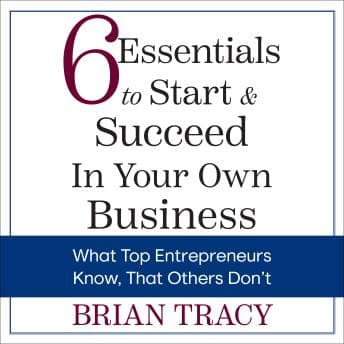

What does it actually take to convince someone to quit their stable paycheck and leap into entrepreneurship? And more importantly — can a book do that responsibly?
I was chopping onions for a chana masala that was going to take way longer than it should've (I always overcomplicate the tempering, every single time) when I started this one. Brian Tracy's name has been floating around the self-help-meets-business space for decades, and I'd never actually sat down with any of his work. Five hours and nine minutes seemed manageable. A Sunday cooking session, basically.
The Psychology of the Framework Addict
Here's what I found myself asking: why does Brian Tracy frame everything in numbered lists? Six essentials. Not five, not seven. Six. And the research actually shows there's a reason — chunking information into discrete categories reduces cognitive load and gives the listener a sense of mastery they may not have earned yet. It's a psychological trick, and Tracy is very good at deploying it. The book walks through what he considers the foundational pillars of building a business — from identifying your ideal customer to financial planning to competitive positioning — and each one gets its own structured treatment.
The thing is, if you've read any business book published after 2005, you'll recognize most of these ideas. Customer avatar development, value proposition clarity, the importance of cash flow management. Tracy presents them with the confidence of someone who's given this talk ten thousand times (because he literally has — the man has done thousands of seminars worldwide). And that confidence is... genuinely persuasive? Even when the advice isn't groundbreaking, his delivery makes you feel like you're being let in on something. The protagonist of this book — and yes, the aspirational entrepreneur IS the protagonist — exhibits classic locus-of-control patterns. Tracy keeps reinforcing that success is a function of personal agency and systematic thinking, not luck. Which is a useful belief system for someone starting a business, even if it conveniently sidesteps structural barriers.
What I appreciated psychologically is that Tracy doesn't romanticize the hustle. He talks about risk assessment in a way that felt grounded rather than reckless. The section on financial planning was the meatiest — he gets specific about margins, startup costs, and the math behind sustainability. That's where the book earns its keep, because too many entrepreneurship books treat money like an afterthought. The contrast is stark when you look at something like Bad Blood, where the entire catastrophe hinges on founders who treated financial reality as optional — Tracy's insistence on margin math suddenly feels less like boilerplate and more like a warning.
Michael Tracy Narrating His Father's Work — A Fascinating Case Study in Inherited Authority
So here's the part that genuinely intrigued me from a psychological standpoint. Michael Tracy narrates his father's book. The dynamic is right there in the audio — a son channeling his father's decades of expertise, and at least one listener described it as Michael doing "a good job narrating his father's words and getting the important message across to a new generation of entrepreneurs." That's a specific kind of parasocial authority transfer, and it works.
Michael's narration is clear, professional, measured. He doesn't try to be his father. He doesn't inject dramatic flair. For a business book, that's exactly what you want — nobody needs a Method-acted performance of cash flow projections. But I'll be honest: the delivery is pretty uniform throughout. There's a steadiness that borders on flat during sections that could've used more energy, particularly when Tracy Sr. is making his more provocative claims about entrepreneurial mindset. A slight shift in pace or emphasis would've helped distinguish the "pay attention, this is important" moments from the "here's supporting context" moments.
At five hours, the length is right. This isn't a book that needed to be longer. If anything, some sections felt padded — the competitive analysis chapter repeated its central thesis about three times too many. My therapist would have thoughts about why business authors feel the need to say the same thing in slightly different words, but I suspect it's less about psychology and more about page count.
Who This Is Actually For (And Who Should Keep Scrolling)
If you're someone who's been thinking about starting a business but hasn't organized your thinking yet, this is genuinely useful. Tracy provides a mental scaffolding that makes the overwhelming feel manageable. It's a solid starting framework.
But if you've already started a business, or if you've read Lean Startup, $100 Startup, or anything by Seth Godin — psychologically, this doesn't track as your next best investment. The ideas here aren't wrong, they're just... foundational in a way that experienced entrepreneurs have already internalized.
I finished the book right as my chana masala was done. Both were competent. Both were satisfying without being surprising. And both did exactly what they promised — no more, no less.
My Clinical Assessment
Brian Tracy knows human motivation patterns well enough to write a book that makes you feel capable without making you feel reckless. That's a harder balance than it looks. The audiobook format works for this content — it's essentially a structured seminar you can absorb while doing other things. Just don't expect it to tell you anything the business section of your local library couldn't. What it will do is organize what you vaguely already know into something actionable. And sometimes, that's the whole point.