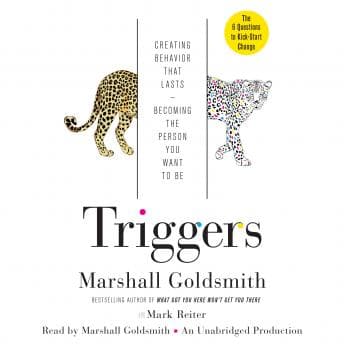

Why is it that I can write a dissertation on narrative identity but can't stop checking my email at 11 PM? That's the question, isn't it? We all know what to do. The problem is actually doing it when the environment—or "triggers"—conspire against us. I picked up Marshall Goldsmith's Triggers during a week where my willpower was basically nonexistent, hoping for a psychological reset.
And honestly? It's a fascinating, if slightly repetitive, look at why we act the way we do.
The Voice of Authority (Literally)
Listening to Goldsmith narrate his own work is like having a very expensive executive coach sitting in your kitchen while you chop onions. (Which is exactly where I was when I listened to Chapter 4). He's warm, he's positive, and he sounds like he believes every word he's saying. Because he wrote them.
Some listeners have complained that the narration feels a bit self-indulgent. And look, they aren't wrong. There are moments where it feels like he's name-dropping or patting himself on the back for his coaching successes. "Let me tell you about the time I helped this major CEO..." Okay, Marshall, we get it. You're a big deal.
But here's the thing—his voice has this specific cadence, authoritative but kind, that makes you actually want to listen to his advice rather than roll your eyes. It's not dynamic performance art; it's a lecture from a guy who knows his stuff.
The Psychology of Why We Keep Failing
Here's where the researcher in me gets excited. The core concept isn't rocket science, but it's psychologically sound. Goldsmith argues that our environment is basically designed to make us fail. (My messy desk agrees.)
The standout technique here is the "Daily Questions." Instead of asking passive questions like "Did I have a good day?", he suggests active ones: "Did I do my best to be happy?" It shifts the locus of control back to you. I tried this for three days. It's annoying how well it works. It's the same kind of personal accountability framework I found in Game of Life and How to Play It, though Goldsmith's approach is far more grounded in behavioral science. My therapist would have a field day with this—it forces you to take responsibility for your own engagement rather than blaming the world.
The book drags in the middle, though. The concepts are simple, but the examples can feel repetitive. If you're impatient, you might find yourself hitting the +30s button. It's not a thriller; there are no plot twists. Just steady, behavioral modification talk.
Who This Is (and Isn't) For
If you're looking for a magic pill or a high-drama narrative, skip this. Seriously. You'll be bored. But if you're actually trying to change a specific behavior—and you're tired of failing at it—give this a listen. People who want quick inspiration without homework should look elsewhere.
The Dissertation Defense Version
It's practical. It's a bit dry. But it understands human nature in a way a lot of self-help books don't. Just be prepared to do the work—listening is the easy part.