
Is there anything more annoying than a book that tells you exactly what you already know, but makes you feel guilty about it?
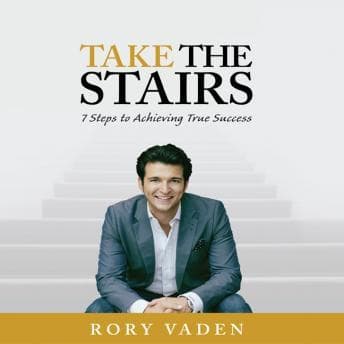
I listened to this on a Tuesday morning Caltrain ride—the 6:14 AM bullet, specifically—and let me tell you, nothing wakes you up faster than Rory Vaden shouting (politely) that your entire life strategy of "finding the easy way" is a bug, not a feature.
We all want the shortcut. I spend half my week writing scripts to automate tasks that take five minutes, just so I never have to do them again. Vaden calls this the "Escalator World." He argues we're addicted to quick fixes. And honestly? He's right. But hearing it at 1.75x speed while surrounded by sleeping tech workers was a distinct kind of irony.
The "Creative Avoidance" Trap
The core concept isn't groundbreaking. If you've read any self-help in the last decade, you know about delayed gratification. It's basically the Marshmallow Test refactored for corporate adults.
But Vaden introduces this term—"Creative Avoidance"—that hit me right in the gut. It's that thing where you reorganize your Jira backlog or clean up your email inbox instead of fixing the critical production outage because the outage is scary and hard. If you need help actually doing the hard thing instead of just thinking about it, Practical Guide to Self-Hypnosis offers some surprisingly practical mental tricks.
(I may or may not be guilty of doing this literally last week.)
The book forces you to look at those "productive" tasks you do to avoid the real work. It's uncomfortable. It's annoying. And it's necessary. The content is practical, focusing on the psychology of why we procrastinate, not just telling us to stop.
Author-Narrated: Feature or Bug?
Rory Vaden narrates this himself. Usually, I'm skeptical of author-narrators unless they're Neil Gaiman, but Vaden is a professional speaker. You can tell. He's got that high-energy, stage-presence voice that projects to the back of the room.
The Good: He believes what he's saying. The energy is infectious. It's impossible to fall asleep to this, even if you're running on four hours of sleep and a lukewarm latte.
The Bad: It can feel a bit... salesy. There are moments where it feels like an infomercial for his consulting firm. At one point, I audibly groaned. (The guy next to me wearing the noise-canceling Bose headphones didn't notice, thankfully.) It's polished, but sometimes it lacks the warmth of a professional voice actor. It's a presentation, not a conversation.
The ROI on Your Time
Here's the data: The book is short. Just over 4 hours. At my standard 1.75x speed for business books, I finished this in two commutes.
Because it's so short, the repetition—and there is a fair amount of it—doesn't hurt as much. He hammers the "Take the Stairs" metaphor until it's firmly cached in your brain. If this were a 12-hour epic, I'd have DNF'd it. But as a quick, tactical strike against my own laziness? It works.
The production quality is clean. No background hiss, no weird mouth noises. Just pure, unadulterated motivational guilt.
Who Gets Value Here (And Who Doesn't)
If you're feeling stuck or you've been "quiet quitting" on your own goals, give this a listen. Skip it if you're already disciplined and just need tactics—this is more about the mindset reboot than specific frameworks. And maybe skip the parts where he pitches his company.
The Debug Report
Is this a literary triumph? No. Could it have been a series of very aggressive blog posts? Probably.
But sometimes you need a system reset. You need someone to tell you that the reason you aren't succeeding isn't because you lack the "secret sauce," but because you're refusing to do the grunt work.