
I was supposed to be debugging a procedural terrain generator at 1 AM on a Tuesday. Instead, I was three hours deep into Luke Skywalker getting politically exiled from his own Jedi Order while my VS Code sat untouched on the other monitor. Dr. Patel, if you're reading this — it was research. Procedural generation of... galactic political systems. Yeah.
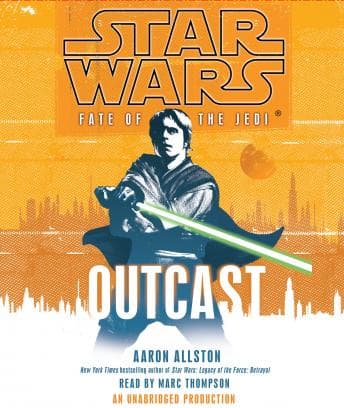
Look, I grew up on the Expanded Universe. I had the Essential Chronology. I argued about Mara Jade on message boards when I should've been doing algebra. So when I tell you that Fate of the Jedi: Outcast scratches a very specific itch — the one where you want Star Wars to feel like a political thriller with lightsabers — I mean it.
Luke Skywalker on Trial Is the Campaign Hook I Never Knew I Needed
The premise here is wild if you sit with it for a second. Natasi Daala — yes, that Daala, the Imperial Admiral — is now Chief of State of the Galactic Alliance, and she puts Luke Skywalker on trial for basically not being a good enough teacher. For failing to stop Jacen Solo from going full Sith Lord. That's like arresting your local fire chief because someone committed arson. But Allston makes the politics feel weighty and real enough that you buy it. The public is scared, the media is hostile, and the Jedi are suddenly the problem. It's got that post-crisis paranoia energy — very Order 66 aftermath, but slower, more bureaucratic, more insidious.
The deal Luke strikes is genuinely interesting: exile from Coruscant, exile from the Jedi Order, in exchange for staying out of prison. And then he takes Ben and basically goes on a galactic road trip to figure out what the hell happened to Jacen. That father-son dynamic is the beating heart of this book. Ben Skywalker is sharp, sarcastic, and just old enough to push back against his dad without it feeling forced. Their banter while navigating the Force mystics on Dorin gave me strong "reluctant party members figuring out each other's character sheets" vibes. My D&D group would love this. That same found-family-learning-each-other's-limits energy runs all through Critical Role: Vox Machina--Kith & Kin, which I picked up for similar reasons and found myself equally unable to put down during a debugging session I definitely should have finished.
The Valin Horn Problem (And Why the B-Plot Drags)
Here's where I have to be honest. The Valin Horn subplot — Jedi Knight snaps, goes psychotic, starts insisting everyone around him has been replaced by imposters — is a cool concept on paper. Genuinely creepy premise. But in execution, it moves at the pace of a Senate subcommittee hearing. The Horn family scenes feel like they exist to establish stakes for later books in the nine-book series rather than to pay off anything here. And since this is book one, you can feel the setup. The threads are being laid. The dominoes are being placed. But nobody's pushing them yet.
This is a setup book. If you don't like info-dumps, this isn't for you (but you're wrong). Allston is good at world-building — not Sanderson-level world-building, but the kind where you understand the political geography of a galaxy without needing a map appendix. The problem is that at 10 hours, the pacing feels stretched in spots. The Coruscant political scenes and the Luke-and-Ben-on-Dorin scenes alternate, and they don't always have the same momentum. I found myself zoning in hard during the Dorin Force mystic stuff (the Baran Do Sages and their weird relationship with the Force is genuinely fascinating) and kind of glazing over during the third courtroom-adjacent scene on Coruscant.
Marc Thompson Is the John Williams of Star Wars Audiobooks
Okay, that's maybe hyperbolic. But Marc Thompson has been narrating these books for so long that his Luke Skywalker voice just is Luke Skywalker to me now. He nails the weary authority of post-NJO Luke — this isn't farm boy Luke, this is a man who's lost his wife, watched his nephew fall, and is tired in a way that goes past physical. Thompson's Ben is lighter, quicker, with just enough edge to feel like a teenager who's been through too much. The contrast between father and son comes through in voice alone.
Where Thompson gets a little wobbly is the alien characters. The Baran Do Sages on Dorin have this sort of vaguely Eastern-inflected speech pattern that doesn't always land naturally — it teeters between "mysterious Force culture" and "accent work that's trying too hard." Not a dealbreaker, but noticeable across multiple chapters set on Dorin. Also, after about hour seven, his Daala starts blending a bit with his other authoritative-female-politician voices. But honestly? Steven Pacey walked so other narrators could run, and Thompson is doing solid work in a franchise that demands a lot of range.
Who Gets the Invite to This Table
If you're deep in the EU — sorry, "Legends" — and you survived Legacy of the Force, this is the next logical step and it's a better-written one. Allston always had more humor and sharper character work than some of the other EU authors, and it shows. If you're coming in cold with no EU background? Skip this. You will be lost. This book assumes you know who Daala is, what happened to Jacen, why Mara Jade's death matters, and approximately forty-seven other plot points from previous series.
I read this instead of writing my thesis. Was it worth the setback? For the Luke-and-Ben road trip and the Baran Do Sage mystery, yes. For the Coruscant political slow-burn, maybe wait until you have the next two books queued up so the payoff isn't so distant.
The progression is satisfying — but only if you trust that nine books from now, these dominoes are going somewhere.