
"I didn't feel guilt. I didn't feel fear. For the most part, I felt nothing."
That line hit me somewhere around hour two, crammed into the window seat of a packed Caltrain, and I actually paused the audiobook. Not because it was shocking—I work in tech, I've met plenty of people who'd probably score high on certain personality assessments—but because of HOW she said it. So matter-of-fact. Like she was explaining a bug in production code.
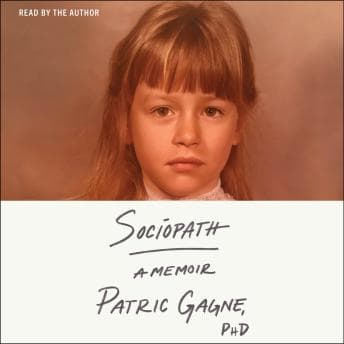
Patric Gagne narrates her own memoir about growing up as a sociopath, and here's the thing: the flat, unemotional delivery that some listeners complain about? That IS the point. You're literally hearing sociopathy through a sociopath's voice. The medium is the message, or whatever that philosophy guy said.
When the Narrator IS the Data
Okay, so I'm a software engineer. I debug systems for a living. And listening to Gagne describe her childhood—the stealing, the lock-picking, the violence she used to "feel something"—it reminded me of watching logs from a system that's technically functional but operating on completely different parameters than expected. She's not broken. She's just... running different code.
Gagne has a PhD in clinical psychology, which gives her this weird dual perspective. She's both the subject and the researcher. Sometimes she'll describe breaking into someone's house as a teenager, then pivot to explaining the neurological basis for why she needed that dopamine hit. It's jarring in a good way. Like reading stack traces while also experiencing the crash.
The production is clean—crisp audio, no weird background noise. Perfect for the 6 AM train when my brain is barely online. I finished this in about five commutes, and the 11-hour runtime felt appropriate. Not padded, not rushed.
The Love Story I Didn't Expect
Here's where it got interesting for me. The book takes this turn when she reconnects with an old boyfriend, and suddenly you're watching someone who claims she can't feel emotions... fall in love? Or something like love? She's very honest about not knowing if what she experiences is the same thing neurotypical people feel. That kind of radical self-examination—questioning the fundamental assumptions about how we process reality—reminded me of the approach in Brief Answers to the Big Questions, just applied to neuroscience instead of physics.
Kevin (my boyfriend, not hers) asked me what I was listening to, and I tried to explain it. "It's a memoir by a sociopath about whether sociopaths can love." He gave me that look. The one that says "your audiobook choices concern me."
But seriously—Gagne's relationship with her husband David becomes this fascinating case study. Can you build a functional, loving partnership when one partner literally processes emotions differently? Apparently yes, but it requires a LOT of explicit communication. (Honestly, that's probably good advice for everyone.)
Where the Code Gets Slow
Look, I'm not going to pretend this is perfect. There are sections in the middle where she's describing her dissertation research, and it gets... academic. Not bad, just slower. I bumped up to 1.75x for those parts.
Also—and this is minor—when she voices other characters, it's a little odd. Her husband, her therapist, random people from her past... they all sound vaguely whiny? It's distracting. But honestly, for an author-narrated memoir, I've heard way worse. At least she's not doing dramatic pauses every three sentences like some celebrity memoirs I could name.
Some listeners have questioned whether her diagnosis is even accurate, and I get that skepticism. Sociopathy is one of those terms that's been so sensationalized by true crime podcasts and thriller novels that hearing someone use it about themselves feels almost... performative? But Gagne addresses this head-on. She talks about the stigma, the assumption that all sociopaths are serial killers, the way mental health professionals basically told her there was "no hope" for treatment.
Queue It or Skip It?
Perfect for: train, gym, long walks. The pacing is steady enough that you won't miss crucial plot points if someone bumps into you. Skip if you need high emotional narration to stay engaged. This is not that. The flatness is a feature, not a bug, but I understand it's not for everyone.
The ROI on this audiobook is solid if you're interested in psychology, neurodivergence, or just want something that'll make you think differently about personality disorders. It's basically "debugging the human operating system" but for empathy.
End of Stack Trace
I walked away from this with a genuinely different perspective on what "normal" emotional processing even means. And isn't that the whole point of memoirs? To see the world through someone else's—very different—eyes? Educated did that for me too, though Tara Westover's journey was about escaping a different kind of isolation.
Also, if you're neurodivergent yourself, there's something validating about hearing someone say "my brain works differently and that's not automatically evil." Even if her specific difference is pretty extreme.