
"You can't be what you can't see."
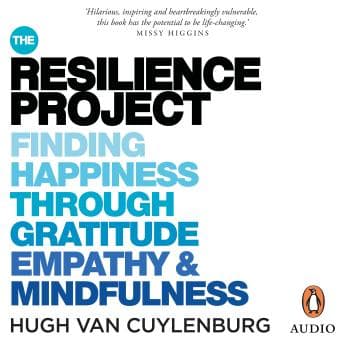
Hugh Van Cuylenburg drops this line somewhere around the second hour, and I had to pause my 2.0x playback. Not because I didn't catch it—because I've watched three different startups fail precisely because their founders couldn't model the resilience they were preaching to their teams. This Australian schoolteacher-turned-mental-health-advocate just articulated something I've seen destroy companies.
I finished this during a red-eye from San Francisco to Seoul, visiting my parents for the first time in eighteen months. Couldn't sleep. Kept thinking about his sister Georgia's eating disorder story that Hugh shares early on—raw, uncomfortable, the kind of family crisis that doesn't have a neat resolution. My mom ran a dry cleaning business for thirty years and never once talked about mental health. It wasn't a thing you discussed. You just worked harder.
The India Revelation That Actually Holds Up
Here's where most self-help books lose me: the author has some epiphany in an "exotic" location, comes back to the West, and packages indigenous wisdom into a framework with a cute acronym. I was ready to be annoyed.
But Hugh's story about teaching in a remote Indian village—watching kids with nothing display more genuine contentment than his well-resourced Australian students—doesn't come across as poverty tourism. He's genuinely confused. He admits he doesn't have the answers. And when he lands on GEM (Gratitude, Empathy, Mindfulness), he's not selling it as revolutionary. He's basically saying: this is what my parents did instinctively. Now it has a TED talk.
The neuroscience sections are light—this isn't "Thinking, Fast and Slow"—but that's actually fine. Under five hours means Hugh respects your time. He gives you the framework, the stories to make it stick, and gets out.
Author-Narrated Done Right
Hugh reading his own book works because he's a performer. Years of school presentations have trained him to land a joke, hold a pause, and shift from humor to vulnerability without it feeling manipulative. When he talks about Georgia's anorexia, his voice tightens in a way no professional narrator could fake. When he describes his own anxiety spiral, you hear the slight embarrassment of a guy who teaches resilience admitting he's not always resilient.
No accent quirks to report, no production issues. Just a man talking to you like you're sharing a beer at his kitchen table. Jenny would say I'm being generous. Jenny is right—I'm usually harsher on self-help narrators. But Hugh earns it.
Where The Consulting Brain Kicks In
I've sat in rooms with C-suite executives who've paid McKinsey $500K for frameworks less coherent than GEM. The simplicity is the feature, not a bug. Gratitude journals, empathy exercises, basic mindfulness—none of this is groundbreaking. But Hugh's gift is making you actually want to do it.
The parenting sections hit different if you have kids (I don't, but I've got nieces who are glued to their phones in ways that concern me). He's practical without being preachy. "Model the behavior" isn't revolutionary advice, but hearing him describe how he does it with his own kids—the specific failures, the awkward attempts—makes it actionable.
I've seen this fail at three different companies: leaders who mandate wellness programs but work 80-hour weeks themselves. Hugh would call that out. He does, actually, in a story about a school principal who couldn't understand why her stressed-out teachers weren't embracing mindfulness workshops.
Who Gets Value Here (And Who Doesn't)
Parents, teachers, anyone managing humans who seem more anxious than they should be. If you're already deep into meditation practice and gratitude journaling, skip it—you know this material. But if you're the person who rolls their eyes at "self-care" because it sounds soft, Hugh's approach might sneak past your defenses. He's not woo-woo. He's a former footy player who stumbled into mental health advocacy because his sister almost died. That same raw family honesty shows up in We'll Always Have Summer, though in a completely different context—coming-of-age instead of mental health.
Not for you if you want rigorous academic citations or a comprehensive mental health toolkit. This is a gateway book, not the whole curriculum.
The ROI Calculation
A self-help book that respects your time. Under five hours, author-narrated with genuine warmth, and a framework simple enough to actually implement. My parents built resilience through sheer immigrant grit—no framework, no vocabulary for it. Hugh's giving the next generation the language. That's worth something.
I texted my mom a Korean translation of "gratitude journal" when I landed in Seoul. She sent back a confused emoji. We're working on it.