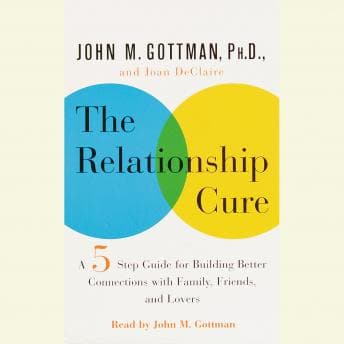

Look, I have a confession. I downloaded this audiobook because my boyfriend Kevin and I had the same fight three times in one week about who was supposed to refill the Brita filter. Not exactly marriage-ending stuff, but I started wondering if there was something deeper going on. So here I am, a software engineer who spends her days debugging distributed systems, trying to debug my relationship with a psychology audiobook on the 6:47 AM Caltrain.
And honestly? The ROI on this one surprised me.
The "Bid" Concept That Actually Made Sense
Gottman's central framework is this thing called "emotional bids" - basically, every time you reach out to someone for connection, you're making a bid. Could be asking about their day, could be pointing at a weird bird outside, could be sighing loudly hoping they'll ask what's wrong. (We've all done that last one. Don't pretend you haven't.)
The breakthrough moment for me was realizing that Kevin saying "hey, look at this meme" isn't him being annoying while I'm trying to focus - it's a bid. And every time I respond with "mmhmm" without looking up from my laptop, I'm basically declining the connection. Ouch. This framework is basically dependency injection but for relationships. You're constantly sending and receiving these micro-requests, and how you handle them determines the health of the whole system.
The research backing this is solid. Gottman's been studying couples for decades, and his predictions about which marriages will last are famously accurate. So when he says turning toward bids instead of away from them is the fundamental unit of relationship health, I actually believe him.
When Research Gets Dense (And Your Attention Wanders)
Here's where I have to be honest. This audiobook is about 5 hours and 48 minutes, and there were definitely stretches - especially in the middle - where I zoned out. The content is research-heavy. Like, really research-heavy. There were moments on the train where I'd realize I'd been staring at someone's laptop screen for five minutes without processing a single word Gottman was saying.
The narration is by both authors themselves, which is a double-edged sword. On one hand, you're getting the material straight from the source. There's an authenticity there that I appreciate - you can tell Gottman genuinely cares about this stuff. That kind of raw sincerity reminded me of Untamed, where Glennon Doyle's unpolished delivery actually made the message land harder. On the other hand, neither of them is Ray Porter. (I mean, who is, really.) The delivery is clear and professional, but it's not going to keep you riveted at 6 AM when you're running on four hours of sleep after a production incident.
I ended up bumping it to 1.5x, which helped with the pacing considerably. At normal speed, it felt like sitting through a really thorough lecture. At 1.5x, it felt more like an engaged conversation with a smart professor who happens to have all the data.
The Five Steps (And Which Ones Actually Stuck)
The program breaks down into five steps for improving emotional connection. I won't walk through all of them - that's what the book is for - but the ones that hit hardest for me were about understanding your own emotional heritage and learning to communicate during conflict.
There's this whole section on "enduring vulnerabilities" - the emotional baggage we all carry from childhood that shows up in our adult relationships. Self-Reliance takes almost the opposite approach—Emerson's all about trusting yourself without dwelling on past conditioning—but both made me think harder about where my reactions actually come from. Gottman walks you through exercises to identify yours. I couldn't do the workbook-style stuff while commuting, obviously, but just hearing the framework made me think differently about why certain things set me off.
The conflict communication stuff is practical in a way I appreciated. Not just "use I-statements" platitudes, but actual scripts and strategies based on what works in his research. Could some of this have been a blog post? Maybe the summary version. But the depth here is what makes it stick.
Worth Your Commute?
Bottom Line: Worth your commute if you're willing to engage with it. This isn't passive listening material - you'll get out what you put in.
Who should listen: Anyone stuck in repetitive arguments who suspects there's a pattern underneath. Couples who communicate fine on the surface but feel disconnected. People who want research-backed frameworks, not just vibes.
Who should skip: If you want entertainment or can't handle some dry academic stretches, this isn't it. Also not great as background noise during deep work - it demands too much attention.
I finished this in about 4 commutes, and I've already caught myself thinking "that's a bid" multiple times. Kevin pointed out a weird cloud formation yesterday and I actually looked up from my phone. Progress.
Just... maybe have coffee first.









