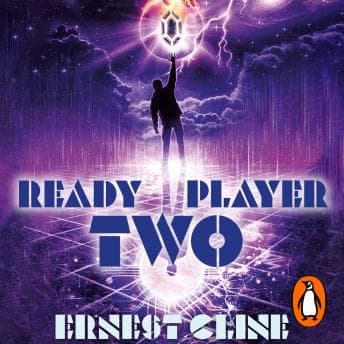
Look, I'm just gonna say it: Ready Player Two is the sequel that tests your loyalty to the OASIS. And honestly? I'm still not sure where I land.
I listened to this during a marathon thesis-avoidance session (Dr. Patel, if you're reading this, I was definitely working on my procedural generation chapter), and by hour six I was simultaneously hooked and frustrated. That's... kind of the Ready Player Two experience in a nutshell.
The Wheaton Factor
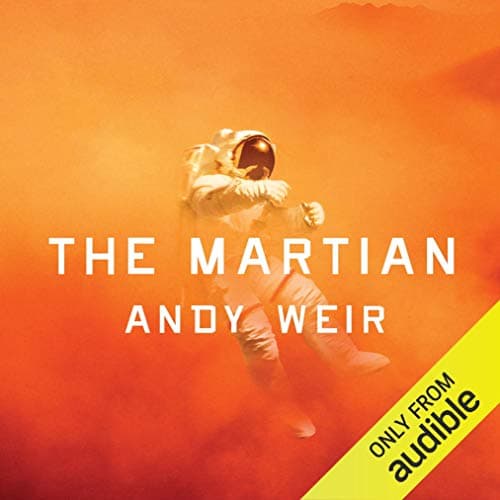
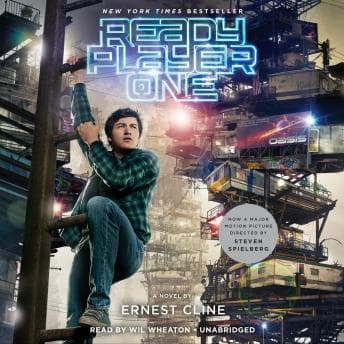
Wil Wheaton is doing the heavy lifting here, and I mean HEAVY. The man brings an energy to Wade Watts that's genuinely infectious - his pacing ramps up during the quest sequences in a way that had me forgetting I was supposed to be annotating research papers. That same high-energy commitment is what made his work on The Martian so effective - he knows how to sell a protagonist who's in way over their head. He's got this warmth to his delivery that makes even the most exposition-heavy sections feel like your enthusiastic friend explaining their favorite game's lore.
But here's the thing. Wade in this book is... kind of insufferable? Like, the character has become this petulant billionaire who makes questionable decisions, and Wheaton has to sell that. He does it well - maybe too well. There were moments where I found myself muttering "shut up, Wade" at my headphones, which shows how much Wheaton commits to the performance. (My roommate thought I was losing it. Fair.)
His female voices are serviceable but not great. There's apparently a character near the end where his voice choice made some listeners laugh out loud - unintentionally. I won't spoil who, but yeah, I can see it. His range for accents is similarly limited. But honestly? For a single-narrator performance carrying 13+ hours of dense pop culture references and virtual world-hopping, he's doing solid work.
When the Nostalgia Becomes a Lecture
Okay, so the magic system here - and yes, I'm calling the OASIS tech a magic system because fight me - is actually chef's kiss. The ONI headset concept? The way it changes how users experience the virtual world? That's Sanderson-level world-building in terms of establishing clear rules and then exploring their implications. Cline is genuinely creative with the tech.
But the pop culture references. Oh man. The pop culture references.
Ready Player One walked a line between "fun Easter egg hunt" and "Wikipedia article about the 80s." Ready Player Two occasionally faceplants on the wrong side of that line. There are sections that feel less like a novel and more like Cline really, really wants you to know everything about Prince's discography. Or John Hughes films. Or whatever deep cut he's obsessing over in that chapter.
If you're the kind of person who loves info-dumps - and look, I am that person, I read Brandon Sanderson appendices for fun - you might be fine. But even I found myself zoning out during some of the more lecture-y passages. The pacing drags in the middle act in a way the first book didn't.
The Quest Structure Still Works (Mostly)
The actual treasure hunt? The puzzles and the progression through different virtual worlds? That part is satisfying. Each new zone has its own flavor, its own challenges, and the stakes escalate in ways that kept me listening past my intended stopping point. The villain situation adds genuine tension - this isn't just a fun scavenger hunt, there's real danger.
My D&D group would absolutely argue about whether the final act's resolution makes sense within the established rules. (I can already hear Marcus saying "that's not how that would work" and honestly, he might have a point.) But the journey there is fun enough that I was willing to go with it.
Roll for Initiative (Or Don't)
If you loved Ready Player One and want more time in the OASIS, you'll probably enjoy this despite its flaws. Wheaton's narration is genuinely the audiobook's strongest asset - it transforms what could be tedious reference-listing into something that at least feels energetic. For commutes or gaming sessions where you want background story? This works great. The 13+ hours flew by faster than they had any right to.
But if Wade's character in the first book already annoyed you? Skip this. He's worse here. More self-righteous, more oblivious, more... much. Some listeners found him genuinely unlikable, and I get it.
Is it a must-listen? Nah. Is it worth your time if you're already invested in this world? Yeah, probably. Just go in with calibrated expectations and let Wheaton's enthusiasm carry you through the rough patches.