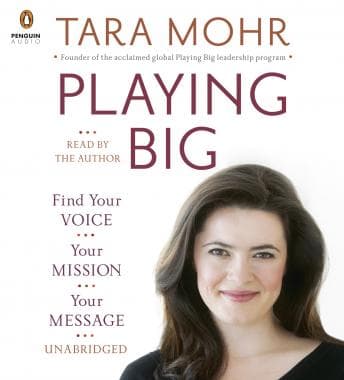

I'm going to start with my biggest complaint: this book is 8 and a half hours long when it could've been 4. I know, I know—I say this about every business book. But Tara Mohr has genuinely useful frameworks buried in here, and the repetition almost made me miss them. Almost.
I was prepping for a client call at 6 AM—startup founder, brilliant woman, chronically underselling herself in board meetings. Classic case. I put this on while making coffee, expecting the usual "lean in" rehash. What I got was something my parents would actually recognize.
The Inner Mentor Thing Actually Works
Here's what separates this from the Sheryl Sandberg shelf: Mohr doesn't just tell you to be confident. She gives you a specific visualization exercise—imagine yourself 20 years in the future, the woman who's already figured it out, and ask her what she'd do. Sounds woo-woo. I rolled my eyes. Then I tried it with a client.
She went from "I don't know if I'm ready to ask for that raise" to "Why am I still justifying my value to people who hired me?" in one session. That's not nothing.
Mohr's framework for distinguishing between "pacifying" (keeping others comfortable) and actual strategic communication? My mom did this instinctively every time she dealt with difficult customers at the dry cleaners. She just called it "not being stupid." Now it has a Stanford MBA attached to it. Fine. At least Mohr earned hers.
Author-Narrated, and It Shows—In a Good Way
Tara Mohr reads her own book, and here's the thing—she sounds like she's actually talking to you. Not performing. Not reading. There's this warmth that made me feel like I was getting advice from a smart friend who happens to have done the research. Her delivery is thoughtful, almost gentle, which works for the material but might frustrate anyone looking for a Tony Robbins energy hit.
The pacing is deliberate. Too deliberate for me at 1.0x—I bumped it to 1.5x and it felt like a normal conversation. At 2.0x, her pauses still landed, which tells you something about how she structured the read.
Where It Gets Soft Around the Edges
My issue isn't with the advice—it's with the framing. Mohr positions this as universally applicable, from executives to stay-at-home moms. And technically, sure. But some sections feel like they're speaking to a very specific demographic: educated, already-privileged women who need permission to want more. Nothing wrong with that audience. Just be honest about it.
The "unhooking from praise and criticism" chapter? Solid. The "good girl habits" section? Useful, though I've seen these patterns in men too—just manifested differently. The rallying cry moments? Jenny would say I'm being harsh. Jenny is right. But they did fall flat for me. The practical tools are the star here, not the motivation.
What My Clients Actually Use
The "10 rules for brilliant women" framework. The distinction between "callings" and "goals." The specific language patterns for self-advocacy. These are the sections I've sent to three different founders this quarter. They work because they're concrete, not because they're inspiring.
Mohr's background—Yale undergrad, Stanford MBA, thousands of women through her program—gives her credibility, but more importantly, it means she's seen the patterns. She knows what actually moves the needle versus what just sounds good in a TED talk.
Who Gets Value Here (And Who Won't)
Women in leadership roles who know they're underselling themselves but can't pinpoint why—this is your book. Same goes for coaches, managers, anyone who works with high-achieving women stuck in self-diminishing patterns. Skip it if you want tactical career advice or can't tolerate any "inner work" framing. And if you need high-energy motivation, look elsewhere.
The Dry Cleaner's Daughter Verdict
This is what my parents did instinctively. Now it has a TED talk. And honestly? That's not a criticism. Sometimes you need someone to name the thing you already know so you can actually use it. Caste does something similar—naming systemic patterns we've all witnessed but couldn't quite articulate.
The key takeaway is worth the listen. The other 7 hours? Not so much. Skip the first chapter's setup, lean into the Inner Mentor exercise in chapter 3, and take notes on the communication frameworks. That's where the ROI lives.
Is it the best women's leadership book out there? Probably not. Is it better than 80% of the business books cluttering my Audible library? Absolutely. And Mohr narrating it herself adds a layer of authenticity that most ghostwritten executive memoirs can't touch.
I sent it to the startup founder. She finished it in a week. Asked for the raise. Got it. Sample size of one, but still.