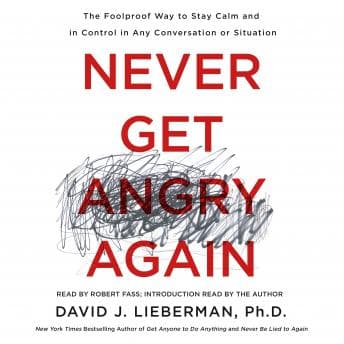

I was debugging a particularly nasty race condition at 11 PM, stress-eating almonds and genuinely considering throwing my laptop out the window. So naturally, I queued up a book called Never Get Angry Again. The irony was not lost on me.
Here's the thing: this isn't another "count to ten and breathe" book. Lieberman's core thesis is almost engineer-brained in its logic—anger management techniques fail because they're patches on a broken system. You're trying to suppress output without fixing the input. The real solution? Don't get angry in the first place. Which sounds like telling someone "just don't have bugs in your code," but he actually backs it up with a framework that makes sense.
The Architecture of Not Losing Your Mind
Lieberman breaks anger down into three components: emotional, physical, and spiritual. And before you roll your eyes at "spiritual"—he's not getting woo-woo on you. He's talking about ego, self-worth, perspective. The stuff that makes you lose it when someone cuts you off in traffic isn't really about the traffic. It's about feeling disrespected, feeling like your time doesn't matter, feeling like you're not in control.
This reframing hit different for me. I've been on-call enough times to know that the 2 AM page doesn't make me angry—it's the assumption that I'll always be available, the feeling that I'm a resource to be allocated rather than a person. Lieberman would say the page is neutral. My interpretation creates the anger. And honestly? He's right.
The book moves through practical applications pretty efficiently. At 5.5 hours, it respects your time—this could've been a blog post, but it's more like... a really good blog post series? The concepts build on each other without the padding you usually get in self-help.
The Dual Narrator Situation
Okay, so here's where it gets interesting. The author narrates portions himself, and Robert Fass (two-time Audie winner, the man knows what he's doing) handles other sections. This split actually works better than I expected. Lieberman reading his own material gives it an authenticity—you can hear when he's personally invested in a concept. Fass brings the professional polish that keeps you from zoning out during the more technical explanations.
I listened at 1.5x, my usual speed for anything that could've been a TED talk, and it held up fine. Fass's sections especially benefit from a slight speed bump—he's got that measured, authoritative delivery that can drag at 1x.
Where the Code Breaks
Not everything compiles cleanly. Some of Lieberman's examples feel a bit dated—the scenarios he uses are very... boomer workplace? Like, nobody's yelling at their secretary anymore because nobody has secretaries. The principles translate, but you'll be doing some mental find-and-replace.
The "spiritual" section, while not as bad as I feared, still leans into some assumptions about meaning and purpose that won't land for everyone. If you're a strict materialist, you might find yourself skipping forward. The psychological and practical stuff is strong enough to carry the book even if you bail on that section.
Who Needs This Debug Manual
This is basically cognitive behavioral therapy for people who'd rather debug their own brain than sit in a therapist's office. POSITIVE THINKING POWER takes a similar approach to rewiring your mental patterns, though it's more focused on the inner critic than anger specifically. If you've ever wanted to understand why you react the way you do—not just suppress the reaction—this is your book.
Skip if you want specific scripts for difficult conversations. This is internal rewiring, not external tactics.
I finished this over three commutes and immediately texted Kevin about the ego-investment framework. He said "so you're finally admitting you get defensive about code reviews?" Which... fair. But also, I didn't get angry about it. Progress?
Worth the CPU Cycles?
At 5.5 hours, the time investment is reasonable. The concepts are actually applicable—I've already caught myself mid-frustration a few times, running through Lieberman's framework. Is it going to solve your anger issues forever? Probably not. But it gives you a better mental model than "just breathe," and sometimes that's enough to interrupt the pattern.
The dual narration keeps it from getting monotonous, the length respects your time, and the content has actual substance. For a self-help book, that's basically hitting the trifecta.