
This isn't a business book. I know. But Jenny handed me her AirPods after she finished it and said, "You need to understand this." When your wife of 12 years says that with that look, you listen.
So here I am, a management consultant reviewing a trauma therapy book. And honestly? The ROI framework applies here too. Just... differently.
The Business Case for Emotional Debt
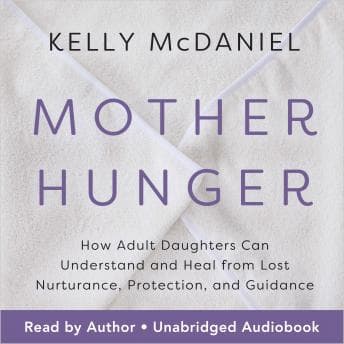
Kelly McDaniel does something I respect: she names the problem clearly. "Mother Hunger" - the unmet needs for nurturance, protection, and guidance that adult daughters carry forward. It's a clean framework. Three pillars. Measurable gaps. I've seen worse organizational structures in Fortune 500 strategy decks.
Here's what got me: McDaniel explains how women (and yeah, some men - she addresses this) develop what she calls "addictive relational patterns" when these three needs go unmet. The constant seeking. The unstable relationships. The cycles that look irrational from the outside but make perfect sense when you understand the underlying deficit. This Naked Mind maps similar patterns around alcohol—the same cycle of seeking something external to fill an internal void.
I've watched this play out in boardrooms. That executive who can never get enough validation. The leader who sabotages every mentor relationship. The high performer who burns out chasing approval that will never come. McDaniel gave me language for patterns I've observed for years but couldn't name.
When the Author Narrates (And It Actually Works)
McDaniel reads her own book, which - let's be honest - usually goes badly. Authors are writers, not performers. But she's a therapist, and it shows. Her voice has that quality of someone who's sat across from thousands of women in pain and learned exactly how to hold space without judgment.
The pacing is deliberately slow. I tried my usual 2.0x and had to dial back to 1.5x. This isn't information to speed through - it's material that needs processing time. McDaniel seems to know this. She pauses. She lets concepts breathe.
One issue: the volume variation. When she gets into heavier research sections or psychological terminology, her delivery shifts and it can be harder to follow. Not a dealbreaker, but I found myself rewinding a few times during the attachment theory deep-dives.
What My Parents Would Say
My mom worked 14-hour days at the dry cleaning shop. She didn't have time for "nurturance" - she was surviving. My dad was the same. And yet somehow, despite the chaos, despite the exhaustion, they showed up. Not perfectly. But enough.
McDaniel addresses this - the difference between mothers who couldn't and mothers who wouldn't. The difference between circumstance and character. It's not a blame game. It's a diagnostic tool.
I called my mom after finishing this. Didn't tell her why. Just called.
The PDF Situation
There's a downloadable PDF with supplementary material. You'll want it. McDaniel references exercises and frameworks that benefit from visual support. The instructions for accessing it are a bit clunky (product IDs and download codes - very 2015), but worth the extra steps.
Who Should Listen (And Who Shouldn't)
If you're a woman who's ever felt that "achy, lonely emptiness" McDaniel describes - or if you love someone who has - this is worth the 8 hours. Skip it if you want quick fixes or productivity hacks. This is slow, careful work that doesn't fit neatly into a quarterly goals spreadsheet.
The Consultant's Take
Here's the thing I tell my startup clients: you can't optimize a system you don't understand. McDaniel helps you understand the system. What you do with that understanding is up to you.
Jenny was right. I needed to hear this. Not for me, exactly, but to understand something I'd been missing. That's worth more than most business books I've listened to this quarter.
(And no, I'm not going soft. Next week I'm back to organizational behavior. But sometimes the most strategic thing you can do is understand the humans in your life. Even - especially - the ones who are healing.)