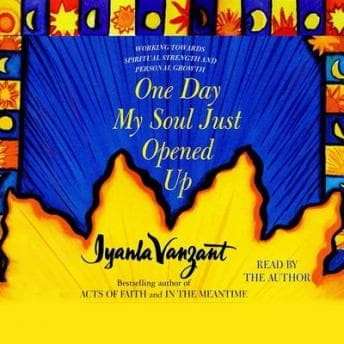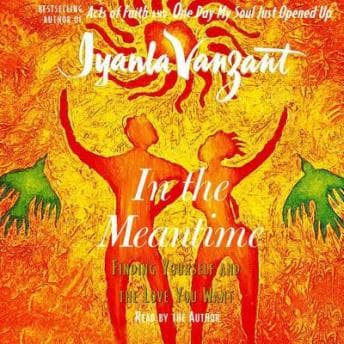

I was prepping for a client call about organizational culture when I decided to queue this up. Two hours, author-narrated, relationship-focused self-help. Not my usual territory. But a founder I'm working with keeps talking about Iyanla Vanzant like she's the Oracle of Delphi, so I figured I'd see what the hype was about.
Bottom line: This isn't a business book, and I'm not going to pretend it is. But there's something here that my spreadsheet-obsessed brain needed to hear.
The House Metaphor That Actually Works
Look, I've sat through hundreds of hours of self-help content. Most of it is recycled fortune cookie wisdom stretched into eight-hour audiobooks. Vanzant does something different. She uses this extended metaphor of a house—basement, first floor, second floor, third floor—to map emotional and spiritual growth. Each floor represents a different level of self-awareness and readiness for love.
Is it a bit woo-woo? Sure. But here's the thing—it's a framework. And frameworks are how I think. Instead of vague platitudes about "loving yourself first," she gives you a mental model. You can actually locate yourself in the house. You can diagnose which floor you're stuck on. That's useful.
My parents never had time for therapy or self-reflection. They were too busy surviving. But watching them, I can see now they were stuck in the basement for decades—survival mode, scarcity thinking, unprocessed pain. This book gave me language for something I'd observed but couldn't articulate.
Iyanla in Your Ears
She narrates this herself, and honestly, it's the right call. Her voice has this warm, Southern cadence that feels like she's talking directly to you. Not at you—to you. There's a difference. Some self-help narrators sound like they're reading a teleprompter at a corporate retreat. Vanzant sounds like she's sitting across from you at a kitchen table.
That said, if you're not used to her style, it might feel a bit... much. She leans into the spiritual language pretty hard. There are moments where the consultant in me wanted to say "okay, but what's the action item here?" The book doesn't always give you that. It's more about shifting perspective than executing a 90-day plan.
At two hours, it's mercifully short. I listened at 1.5x (giving myself permission to slow down for once) and finished it during meal prep. No filler. No padding. Finally, a self-help book that respects your time.
Where It Gets Real
The part that hit me—and I wasn't expecting this—was her discussion of how we bring our unfinished business into every relationship. The "dirty windows" metaphor from the book description? It's not just cute marketing copy. She really digs into how past pain distorts how we see current partners.
I've seen this play out with clients. Founders who can't trust their co-founders because of some betrayal from a decade ago. Executives who micromanage because they never processed their own failures. Vanzant is talking about romantic love, but the principles translate. Unprocessed baggage doesn't stay in its lane. Anxious for Nothing tackles similar territory—how unprocessed worry bleeds into everything we touch.
Jenny would say I'm deflecting by turning this into a business lesson. Jenny is right. But that's how I process things.
The Honest Critique
This book is from 1998. Some of the examples feel dated. And if you're looking for research-backed psychology or data-driven insights, you won't find them here. Vanzant operates in a different register—spiritual, intuitive, experiential. That's not a flaw, but it is a style preference.
Some reviewers complained it's repetitive. I didn't find that in the audiobook version, but maybe the print edition drags more. At two hours, there's not much room for repetition anyway.
Also—and I say this with respect—if you're in a crisis, this book is a starting point, not a solution. It's reflective, not prescriptive. Good for reframing, less useful for "what do I do Monday morning."
Who This Is (and Isn't) For
If you're in a transition—between relationships, between jobs, between versions of yourself—this might land for you. McConaughey's Greenlights worked for me during a similar in-between phase, though his approach is less framework, more memoir. If you're the type who needs bullet points and KPIs, skip it. If you've ever wondered why you keep making the same relationship mistakes, queue it up.
I'm not going to become an Iyanla evangelist. But I get it now. She's doing something my MBA didn't teach me: helping people understand their own operating system before trying to optimize it.
Sometimes the ROI isn't measurable. Sometimes you just clean the windows.