
Look, I usually measure audiobooks in weeks, not minutes. I'm used to 40-hour sci-fi epics that require a spreadsheet to track the characters. So when I saw this was 1 hour and 20 minutes? I almost skipped it. That's shorter than my morning stand-up meeting on a bad day.
But here's the thing—I had exactly one commute leg left before the weekend, and my brain was fried from debugging a race condition that shouldn't exist. I needed something low-stakes. Plus, Kevin keeps telling me my "active listening" sounds more like "waiting to interrupt." (He's not wrong.)
The OG Voice Interface
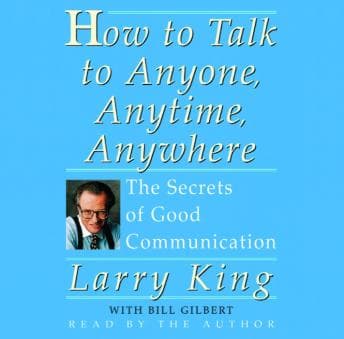
First off, it's Larry King. Narrating his own book. If you grew up with CNN in the background like I did, his voice is basically audio comfort food. It's gravelly, specific, and totally unpolished in the best way. He doesn't sound like a narrator reading a script; he sounds like he's sitting across from you at a diner, telling you stories about the good old days.
And yeah, it's very anecdotal. He drops names like Frank Sinatra and Ted Turner. Does that help me talk to a Product Manager about API rate limits? Not directly. But the vibe is infectious. You can hear the smile in his voice. It's a performance that doesn't feel like a performance, which—ironically—is exactly what he's trying to teach you to do in conversation.
Debugging Human Latency
The advice here is essentially the "Hello World" of social skills. There's no complex algorithm. It boils down to: Be curious. Ask "Why?" Listen more than you talk.
Technically, I know this. We all know this. But executing it at a networking event when you'd rather be home playing Baldur's Gate? That's the hard part. Larry frames communication not as a performance, but as a data retrieval process. If you focus on getting data (stories) out of the other person, you stop worrying about how you look.
He has this bit about the "best question" to ask, which is just... "Why?" It's simple. It's elegant code. It works on everyone from CEOs to my Uber driver. I tried it on the train ride home with a tourist who looked lost, and we ended up talking for twenty minutes about the architecture of Seattle. (I didn't even have to fake interest.)
The ROI on 80 Minutes
Is this book groundbreaking? No. It's pretty basic stuff. If you've read How to Win Friends and Influence People, you've seen the source code before. I'm Glad My Mom Died takes a much rawer approach to communication—less "how to charm" and more "how to survive when charm is weaponized against you." And honestly, some of it feels a bit dated—like advice from a different era of social norms.
But for the length? It's a solid investment. I listened at 1.5x speed (force of habit) and finished it before the train hit Redwood City. It's a perfect "palate cleanser" between heavy books—like a quick patch update for your social skills. You don't need to study it, just let Larry's voice remind you to stop looking at your phone and actually look at people.
Who's This For?
If you're an introvert who knows the theory but freezes on execution, this is a low-pressure refresher. Skip it if you want deep frameworks or modern workplace-specific tactics—Larry's playing a different game.
Ship It
Sometimes the simplest documentation is the most useful. And unlike my code, this actually works on the first try.