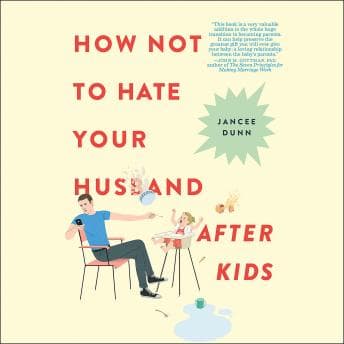

Why do we spend months researching the perfect stroller but approximately zero minutes discussing how a baby will detonate our marriages?
This question kept running through my head during my morning jogs through Cambridge, Jancee Dunn's voice in my earbuds describing what I can only call a fascinating case study in domestic rage. I'm not a parent. But I study why people do what they do, and let me tell you—the psychological dynamics in this book are textbook. Like, literally textbook. I might assign chapters to my students.
The Psychology of the Invisible Load
Here's what Dunn gets right that so many relationship books miss: she doesn't just complain about her husband (though she does plenty of that, and honestly? Earned). She digs into the why. Why do mothers become the default "expert" on diaper changes? Why do fathers get praised for basic parenting while mothers get criticized for the same? The research she cites—from couples therapists to an actual FBI hostage negotiator, which, yes, that's where we are—tracks with what I've seen in my own work on identity formation.
The protagonist (and yes, I'm treating Dunn as a protagonist because my brain works this way) exhibits classic patterns of resentment accumulation. She's doing the emotional labor, the mental load, the invisible work that nobody notices until it doesn't get done. And her husband? He's not a villain. He's just... oblivious. Which is almost worse, psychologically speaking. You can fight a villain. You can't fight someone who genuinely doesn't see the problem.
What makes this person compelling is her willingness to examine her own patterns too. She's not just pointing fingers. She's asking: why do I martyr myself instead of asking for help? Why do I redo his "wrong" dishwasher loading instead of letting it go? My therapist would have thoughts about this. Many thoughts.
When the Author Reads Her Own Mess
Dunn narrating her own book works beautifully here. There's this moment where she's describing a fight with her husband, and you can hear the rueful humor in her voice—like she's still a little embarrassed but also still a little mad. That kind of emotional authenticity is hard to fake. A hired narrator might've smoothed over the edges, made it more... polished. But polished isn't what this book needs.
Her pacing is solid. Seven and a half hours flew by. I finished it over maybe four runs and one very long cooking session (dal makhani, if you're curious, and no, I didn't burn it this time). The conversational style means you're not getting lectured at. You're getting confided in. Big difference.
The only thing that might not work for everyone: Dunn is pretty hard on her husband in places. And look, based on what she describes, he earned it. But if you're someone who gets uncomfortable with candid marital conflict—or if you're a husband listening and feeling personally attacked—it might be a rough ride. She's not cruel, but she's honest. Sometimes brutally so.
Who Should Listen (And Who Should Run)
This is a fascinating case study in how parenthood exposes every crack in a relationship's foundation. The research shows that marital satisfaction drops significantly after kids arrive—and Dunn is living proof, then clawing her way back to something better.
Best for: Parents in the trenches. People about to become parents who want a reality check. Anyone interested in relationship dynamics and why we fall into patterns that make us miserable. Also, honestly? Researchers like me who appreciate when someone does the legwork of interviewing experts and synthesizing findings into something readable.
Skip if: You want a traditional self-help book with bullet points and exercises. This is memoir-first, advice-second. The wisdom is woven into the story, not separated out into neat chapters. Some people hate that. (I don't.)
Case Study: Closed
I found myself asking: why does this book work when so many relationship books feel like recycled platitudes? I think it's the specificity. Dunn isn't speaking in generalities. That same commitment to the messy particulars of transformation shows up in Falling Upward, which examines how we rebuild ourselves after life cracks us open. She's telling you about this fight about this pile of laundry on this Tuesday when she wanted to throw something at her husband's head.
That specificity is what makes psychology real. Not theories—stories. And this is a good one.
I'm sending this to my cousin who just had twins. She'll either thank me or never speak to me again. Worth the risk.