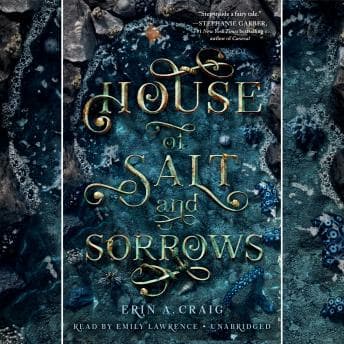

Okay, so I need to confess something. I started this book because the cover looked like something out of a gothic D&D campaign setting, and honestly? That's exactly what I got. Twelve sisters. A cursed manor by the sea. Mysterious deaths. Dancing until dawn with unknown partners. This is basically a one-shot I'd run for my group if I wanted to traumatize them.
I listened to most of this while pretending to work on my thesis—Dr. Patel would be horrified, but the procedural generation paper can wait when there's a mystery about dead sisters and spectral ballrooms. (Don't @ me.)
Highmoor's Salt-Worn Walls and Loose Magic
Look, I'm a Sanderson guy. I like my magic systems with rules and clear limitations. Second Foundation scratches that same itch for me—Asimov's psychohistory has actual rules I can wrap my head around. This book... doesn't do that. And weirdly, it works? Erin Craig builds this atmospheric, creepy-beautiful world where you're never quite sure what's real and what's the gods messing with everyone. The Thaumas family and their island estate feel lived-in—there's history dripping from every description of Highmoor's salt-worn walls and those endless staircases.
The mythology here is loose but evocative. The gods feel like actual threats, not just background lore. And the way the sisters' deaths stack up—plague, falls, drowning—it reads like a cursed bloodline from a campaign backstory I'd spend way too long writing.
The pacing, though. Gonna be honest: it's slow. Like, really slow at the start. I almost switched to a LitRPG around hour two because my brain was screaming for some stat blocks. But once the mystery hooks you—once Annaleigh starts seeing things she shouldn't—you're locked in. The last third? I burned through it during a late-night coding session and completely forgot I was supposed to be debugging.
Emily Lawrence and the Voice in My Head
Emily Lawrence does solid work here. She's got this soothing quality that fits the gothic atmosphere—almost like someone telling you a ghost story by candlelight. Her character differentiation is decent, though with twelve sisters (well, eight by the time the story really kicks off), she's working overtime. I could tell most of them apart, which is more than I can say for some ensemble narrations I've suffered through.
Some folks have mentioned her accent gets a bit strong in places. I noticed it once or twice, but it didn't pull me out. Your mileage may vary. She's no Steven Pacey—but honestly, who is? For YA gothic fantasy, Lawrence gets the job done and then some. Audio production is clean, no weird background noise or jarring transitions.
Fairy Tale Bones, Horror Flesh
Here's the thing about fairy tale retellings: you kinda know where they're going. This is "The Twelve Dancing Princesses" with a horror twist, so if you've read the original, some beats will feel familiar. But Craig leans hard into the gothic horror elements, and that's where the book shines. The ghostly visions? Genuinely unsettling. The ballroom sequences? Gorgeous and eerie in equal measure.
The romance subplot is... fine. It's there. The mysterious stranger with secrets is exactly what you'd expect. If you're here for the romance, you might want more. If you're here for the atmosphere and the creeping dread, you'll be satisfied.
My one real complaint: some of the sisters blur together. With so many of them, a few feel more like names than characters. But Annaleigh herself is a solid protagonist—curious, stubborn, and just desperate enough to make risky choices that keep the plot moving.
Roll for Initiative (Or Don't)
If you liked "The Wicked Deep" or Holly Black's stuff, this is your jam. It's YA, so don't expect grimdark levels of violence, but there's enough darkness here to scratch that gothic itch. My D&D group would absolutely love this as inspiration for a haunted manor one-shot. Skip it if you need fast pacing and immediate action—the slow burn is real. But if you can settle into the atmosphere, the payoff is worth it.
I'm not saying I added "cursed island manor" to my campaign notes immediately after finishing. But I'm also not saying I didn't.