
Look, I'm going to be honest with you - I picked this up during a particularly rough on-call week when I needed something that wasn't code reviews or incident reports swirling in my brain. Spiritual self-help isn't exactly my wheelhouse. I'm way more comfortable with hard sci-fi than metaphysics. But sometimes at 6:47 AM on a packed Caltrain, you just need someone to tell you the universe has a plan, you know?
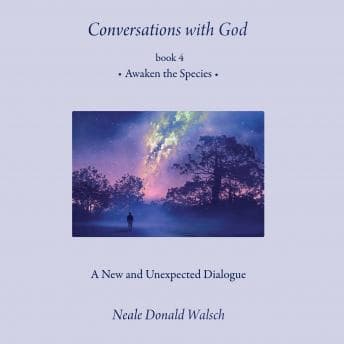
So here's the premise: Neale Donald Walsch, the guy who wrote the original Conversations with God series back in the 90s, wakes up in the middle of the night in 2016 and starts having another dialogue with... God. Capital G. This time, the conversation is about "Highly Evolved Beings" from another dimension who are apparently trying to help humanity level up. And there are 16 specific behaviors these beings exhibit that we could adopt to, basically, not destroy ourselves.
When Sci-Fi Meets Self-Help (Sort Of)
Here's where it got interesting for me. The whole "Highly Evolved Beings" angle reads almost like a first-contact scenario wrapped in spiritual language. If you squint, it's basically asking: what would an optimized species look like? What behaviors would they have debugged out of their collective code? As someone who spends her days optimizing distributed systems, I found myself unexpectedly engaged by the framework - even when I wasn't buying all the conclusions.
The 16 behaviors are things like how these beings handle conflict, resources, relationships. Some of it lands as genuinely useful perspective shifts. Some of it feels like concepts from earlier books in the series getting recycled. (I haven't read the first three, but even I could tell when we were retreading ground.)
The Voice Situation
Okay, so the narration is... a thing. Walsch narrates himself, which makes sense - it's literally his conversation with God. But there are two other narrators, Nemuna Ceesay and Paul Vincent O'Connor, and apparently they switched out from the previous books? I couldn't find much detail on who does what parts, but the multi-narrator setup works for the dialogue format. Walsch has this clear, comforting delivery that fits the material. It's not Ray Porter levels of performance (obviously), but it's authentic. The man believes what he's saying, and you can hear it.
The production is clean. No weird audio artifacts or volume jumps - which matters when you're trying to absorb dense spiritual content while half-asleep on public transit.
The Density Problem
Here's my biggest issue: this is a LOT to take in via audio. At 5 hours 46 minutes, it's not long, but the information-to-minute ratio is high. Multiple listeners mentioned buying the print version afterward just to reference specific concepts. I get it. This isn't a narrative you can passively absorb - it's more like a philosophy lecture series. I found myself rewinding sections, which is annoying when you're also trying not to miss your stop.
I listened at my usual 1.5x and honestly? I'd recommend slowing down to 1.25x or even 1x for this one. The pacing is already measured, and speeding it up turns it into spiritual word soup.
Who Should Queue This Up (And Who Should Skip)
If you're already into the Conversations with God series, you'll probably love this - it's more of what you signed up for. If you're into metaphysical stuff, awakening concepts, or just want something reflective for your commute, it works. Falling Upward scratches a similar itch but with more structure—less cosmic dialogue, more framework you can actually map your life onto.
Skip this if you're impatient, need plot momentum, or want practical action items you can implement tomorrow. It's not a business book masquerading as spirituality (thank god). It's genuinely philosophical and requires you to sit with ideas rather than check them off a list.
I'm somewhere in the middle. Parts of it made me think. Parts of it made me zone out. The "Highly Evolved Beings" framework was genuinely creative, but I kept wanting more specificity - more case studies, more concrete examples. Engineer brain, I guess.
The Replay Value Assessment
Probably not cover to cover. But I might revisit specific sections if I'm in the right headspace. It's the kind of book that probably hits different depending on where you are in life. During my on-call week, it was weirdly soothing. On a normal Tuesday? I might have bailed. That timing-dependent thing happened to me with Surrender Experiment too—sometimes you need to hear "let go of control" exactly when your systems are on fire.
The ROI on this audiobook really depends on what you're optimizing for. If it's spiritual reflection and big-picture thinking about humanity's future - solid. If it's actionable self-improvement - grab the print version and a highlighter instead.