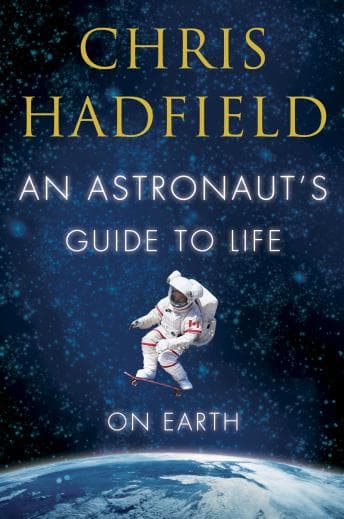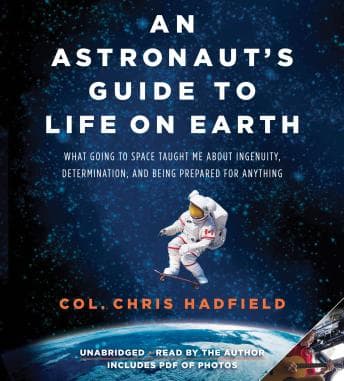

"Don't visualize success." That's maybe three hours into the listen, and I actually paused to rewind because I thought I'd misheard. Every startup founder I've worked with has a vision board. Half of them have manifesting apps. And here's a guy who literally went to space telling you that visualizing success is basically narcissistic daydreaming. I sat there in my home office at 11 PM, a half-finished bourbon on my desk, grinning like an idiot.
Bottom line: This is one of the best business books I've listened to that isn't technically a business book.
The Swiss Army Knife School of Management
Hadfield's core philosophy is simple: aim to be a zero. Not a minus one (the person who creates problems), not a plus one (the hero). Just a zero - someone who doesn't make things worse, who watches, learns, and contributes when they actually have something to contribute. This sounds like corporate humility platitudes until you realize the man is applying it to scenarios where a wrong move means you die in a vacuum.
Here's what got me. He talks about how NASA trains for every conceivable failure. Not just the likely ones - the absurd, never-gonna-happen ones. Temporarily blinded during a spacewalk? They've simulated that. Snake in the cockpit while piloting? Dealt with it. The preparation isn't about expecting disaster. It's about making your panic response so well-rehearsed that it stops being panic.
I've seen this fail at three different companies - not the preparation part, the opposite. Founders who build for the best case scenario and then scramble when reality hits. Hadfield's entire career is a case study in what I try to beat into my clients' heads: the unsexy work IS the work. My parents running their dry cleaning shop in Koreatown - they didn't have NASA's budget, but they had the same instinct. Check the machines before opening. Count the inventory. Prepare for the customer who's going to lose it over a missing button. This is what my parents did instinctively. Now it has a TED talk.
Why Author-Narrated Actually Matters Here
I listen to a lot of author-narrated audiobooks and most of the time I'd rather have a professional. Authors mumble. They rush. They read their own prose like they're seeing it for the first time.
Hadfield is different. The man sounds like he's telling you stories over beers. There's a warmth to it - listener reviews compare it to carpooling with the guy, and yeah, that's pretty accurate. When he describes everyday life in space - eating, sleeping, the weird mechanics of drinking water in zero gravity - his voice has this quiet wonder that a hired narrator would've oversold. He doesn't perform the amazement. He just... has it.
No sound effects, no music, no production gimmicks. Just a Canadian astronaut talking to you for nine hours. And somehow that's enough. His pacing is steady without being monotonous, and his reflective moments hit harder because he's not trying to manufacture emotion. The guy was temporarily blind on the outside of a spacecraft and he tells it like it's a mildly interesting Tuesday.
Narrator rating: 4.5. Only because there are stretches in the middle where the chronological structure slows things down - some of the early career military flying chapters are less gripping than the space stuff. But that's a content issue, not a delivery one.
The 2.0x Speed Report
I kept this at 1.5x. I know. For me, that's basically saying I lit candles and drew a bath. But Hadfield's conversational pace is already efficient - he doesn't pad, doesn't repeat himself, doesn't spend three chapters on one metaphor. Nine hours is genuinely nine hours of content. Finally, a business book that respects your time.
The key takeaway is worth the listen. The other 7 hours? Actually also worth it. That almost never happens.
Who This Is For (And Who Should Skip)
If you're a founder, a manager, anyone who has to perform under pressure - this is required listening. Not because it'll teach you rocket science, but because it'll teach you that the person who obsessively prepares and stays humble about their contributions tends to be the one who survives. If you want a rah-rah motivational book with affirmations, skip it. Hadfield would probably tell you to go simulate your worst-case scenario instead.
Jenny would say I'm being generous with this rating. Jenny is wrong this time.
The Consulting Engagement I'd Actually Renew
I finished this one. All of it. My Audible library is 70% unfinished business books and this will not be joining them. Though I'll admit Auggie & Me was another one that kept me in my seat all the way through — different genre entirely, but that same quality of a narrator who actually has something worth saying. Hadfield wrote a leadership manual disguised as a space memoir, narrated it himself without ego, and delivered more actionable wisdom than most $400/hour executive coaches I've met. Including, on some days, me.