
Look, I don't have kids. Kevin and I are still in the "we can barely keep a succulent alive" phase of our relationship. So why did I spend 10 hours listening to a parenting book? Because my tech lead recommended it after I complained about mentoring junior engineers who fall apart the second their PR gets rejected. She said, "Sarah, managing new grads is basically parenting." And honestly? She wasn't wrong.
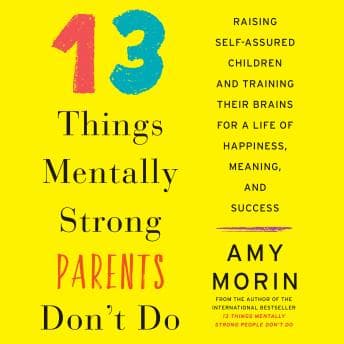
But here's my complaint: this book is called 13 Things Mentally Strong Parents Don't Do, and I spent the first two hours waiting for Amy Morin to get past the setup for each "thing" and into the actual actionable advice. The format is consistent to a fault — here's a story about a parent doing X wrong, here's why it's wrong, here's what to do instead. Rinse, repeat, thirteen times. It's basically a design pattern book but for raising humans instead of building microservices.
The "Could've Been a Blog Post" Problem (But Not Quite)
I almost tagged this with my classic "could've been a blog post" verdict, but I'd be lying. There IS real substance here, just buried under repetitive structure. Morin's framework — don't give your kids power over you, don't expect perfection, don't let guilt influence your decisions — these aren't revolutionary ideas individually, but stacked together they form a pretty solid mental model. As someone who thinks in systems, I appreciated that she's essentially debugging common parenting anti-patterns.
The case studies are where the book earns its runtime. She draws from her work as a psychotherapist and her experience as a foster parent, and you can tell which stories are composites and which hit closer to home. There's a section on not shielding kids from pain where she references her own experiences with loss (Morin lost her mother, her first husband, and her father-in-law within a few years), and her voice shifts — gets a little quieter, a little more deliberate. That's the kind of thing you only get from an author-narrated book. No actor would've known exactly where to pause.
Author-as-Narrator: Credibility Hack or Limitation?
Amy Morin narrates this herself, and the ROI on that choice is mixed. On the plus side: her delivery is clear, her pacing is steady, and there's an inherent authority when the person giving you parenting advice is also the voice in your ears. She sounds like a therapist who genuinely likes people — warm but not saccharine, direct without being preachy. That said, author narration is always a gamble — I've heard it go much worse, like when I sat through Wrestling for My Life, where the sincerity was real but the recording quality made Caltrain's ambient noise feel like a noise-canceling upgrade.
The downside? She's not a professional narrator. There's a flatness to the longer stretches that had me zoning out somewhere around South San Francisco station on more than one morning. At 1.5x she's perfectly fine, but at regular speed the cadence gets a bit monotonous, especially during the "what the research says" portions of each chapter. I bumped up to 1.75x for the business-book-adjacent sections and honestly didn't lose anything.
She's no Ray Porter (obviously — who is?), but she doesn't need to be. This isn't a book that demands vocal range. It demands trust, and she delivers that.
What I Actually Took Away (As a Non-Parent)
I listened to this mostly during a week where I was onboarding two new team members and trying not to micromanage them into oblivion. Chapter 5 — "Don't prevent your child from making mistakes" — hit different when I was literally fighting the urge to rewrite a junior's code instead of letting them learn from the build failure. Morin's point about how rescuing kids from consequences teaches helplessness? That's just dependency injection for emotional development. Let them fail in safe environments so they build resilience for production.
The chapters on not confusing discipline with punishment and not taking shortcuts to avoid discomfort are genuinely useful frameworks, even outside parenting. I kept pausing to text Kevin quotes, which is my highest compliment for a non-fiction audiobook.
Perfect For: Commute, Housework. Skip For: Anything Requiring Your Full Brain.
This is a solid 6AM-on-Caltrain book. You can drift for a minute and pick back up without losing the thread because the structure is so predictable. That predictability is simultaneously its biggest strength and weakness — easy to follow half-asleep, but occasionally boring when you're fully awake.
If you're a parent (or manage humans in any capacity), this is worth the listen. If you've already read her first book, 13 Things Mentally Strong People Don't Do, expect the same framework with a parenting lens — not a reinvention. And if you need someone to validate that letting your kid struggle sometimes isn't cruel, Morin's got your back with actual clinical backing.
The science mostly holds up. She cites real research without drowning you in methodology, which is exactly the level of rigor I want at 6:47 AM.
Commute Verdict: 4 Days, No Regrets, One Parenting Framework I'll Use on Interns
TL;DR: Worth your commute if you're a parent or anyone responsible for developing humans. Solid author narration, repetitive structure that works better in audio than it probably does in print. Speed up to 1.75x for the filler chapters — you'll know which ones.